You expect me to talk about Jake Peavy. You expect me to talk about AJ Burnett, Derek Lowe, or Ben Sheets. You even expect me to talk about Tommy Hanson. But, I won't. I actually want to talk about the two pitchers we know will be in the rotation next season: Jair Jurrjens and Jorge Campillo. Both are in interesting positions. Jurrjens is a young starting pitcher that just broke out in a big way and looks capable of being a front-of-the-rotation starter in the NL. Campillo is a journeyman pitcher that somehow ended up being one of the more dependable starters on the team. Both look good going into next season, but are they?
Jair Jurrjens
Jurrjens was absolutely spectacular last season, and he missed out on the ROY because Soto and Votto had such good seasons. He went 13-10 (which should have been better) with a 3.68 ERA in 188.1 IP. With him being so young (22), you almost expect him to be that good or even better next season. I've been talking about him like he will be, but I've finally come to the realization (actually, I came to the realization a while ago, but I've been ignoring it) that he may not be. One reason is that he pitched those 188 innings last season after only having thrown 143.1 at most in years before. That's a 45 IP difference, which is substantially higher than the 30 IP rule. That can't be good. Another is his fairly high 3.35 BB/9, but to be fair, his minor-league totals were closer to the mid 2's. His 6.64 K/9 wasn't impressive, either (neither was the subsequent 1.99 K/BB). Now, all of this isn't to say that he's a bad pitcher and can't sustain what he did. He had a great season, and there are plenty of reasons to like him. His GB/FB rate of 1.94 is outstanding, and if he can keep coming close to that, he should stay very effective. His BABIP of .311 was also a bit high, but his HR/FB rate of 7.1 was a little low, thus evening things out some. Continuing to show his season wasn't a stroke of luck, Jurrjen's FIP was actually lower than his ERA (3.59). His stats show his season was legit, but that 45 IP difference nags at me. Will he be Fausto Carmona all over again?
Jorge Campillo
Luckily, Campillo's problem is not his increase in innings. He actually only threw .1 more innings more than he did the previous season. This past season, Campillo flew under the radar but was pretty good. He went 8-7 (and suffered the same lack of luck in his record as Jurrjens) with a 3.91 ERA in 158.2 IP (he started the year by relieving). Was he a fluke? Possibly, but his 4.00 FIP shows he wasn't lucky. His 6.09 K/9 isn't inspiring (although he might get some of the ugliest swings I have ever seen on his changeup), but his 2.16 BB/9 is awesome (or at least really good, good enough to make up for not striking out a lot of guys). What about other luck stats? Glad you asked. His HR/FB rate was 9.4% (normal) and his BABIP was .291 (normal). His GB/FB of .97 isn't really good, but he relies so much on his change-up and curveball that he's bound to get more flyballs. Campillo's season wasn't lucky, but can he sustain it anyway? I guess we don't know. He could be Buddy Carlyle and Jorge Sosa, or he could be a late-bloomer.
Will either pitcher be as good next year? Bill James thinks Jurrjens will regress a half run but Campillo should stay the same, and Marcel (I hear this has to do with a monkey, but I'm not entirely sure what is going on here) thinks Jurrjens will be as good while Campillo will regress the half run. They aren't much help. However, I think James is probably more accurate. Jurrjens will probably regress a little in second season as teams get another look at him, and Jurrjens' lack of a solid third pitch (his slider is okay, at least better than Chuck James' whatchamacallit) scares me a bit. Campillo does a lot of things right (good command, good secondary stuff) that make me think he'll be about what he was this season. I guess my main point is that we shouldn't be expecting these two pitchers to be what they were. We have plenty of examples showing how things could change. Jurrjens and Campillo don't have proven track records. Jurrjens just threw a lot more innings than he had previously and could be in line for injury and/or regression. Campillo could just show that he isn't that great of a pitcher, more in line with a guy pitching in the Mexican leagues. As a Braves fan, I hold out hope that Jurrjens can withstand the increase in workload and develop into a great pitcher and that Campillo can stay solid, but the realist in me makes me remind myself that neither are guaranteed.
29 November 2008
Construction ... Again
Updated (3:29 PM): Okay, so I'm trying to get into the holiday spirit.
Thanks,
themarksmith
Jason Giambi
A year removed from the Mitchell Report, Jason Giambi rebounded from a dismal, injury-filled season to hit .247/.373/.502 for the Yankees in the final year of his failed contract. This off-season, he has become an after-thought so far, which isn't much of a surprise. He can't play first base at all, and that limits his potential destinations to teams who need DH's (Rays, Blue Jays, Twins, A's, Rangers, Mariners), which can still be quite a few teams. While his defense is atrocious, a lot of those teams could definitely use a guy with a .875 OPS and would be a major upgrade. For the right price ($10M or less?), he'd probably be a bargain, but let's look at some stats before we just jump in.
Giambi will be 38 years old, so he is getting older. As for his .247 batting average, his BABIP was a pretty low .257 last season, but his LD% was also a low 18.9. Interesting notes here though as his LD% has gone up (not down) the past four seasons, which means his hands might not be slowing down that much, but his K% was a high 24.2. His 14.2 BB% was also lower than his career norms but still pretty good. Giambi's ISO of .255 was also pretty robust, so he still hits the ball pretty hard.
Is he that 30-40 HR guy anymore? Probably not, but I wouldn't be too surprised if he hit 25+ with close to a .260/.360/.500 line next season. Bill James says he'll hit .244/.388/.484, which would be pretty good.
Giambi will be 38 years old, so he is getting older. As for his .247 batting average, his BABIP was a pretty low .257 last season, but his LD% was also a low 18.9. Interesting notes here though as his LD% has gone up (not down) the past four seasons, which means his hands might not be slowing down that much, but his K% was a high 24.2. His 14.2 BB% was also lower than his career norms but still pretty good. Giambi's ISO of .255 was also pretty robust, so he still hits the ball pretty hard.
Is he that 30-40 HR guy anymore? Probably not, but I wouldn't be too surprised if he hit 25+ with close to a .260/.360/.500 line next season. Bill James says he'll hit .244/.388/.484, which would be pretty good.
28 November 2008
Rule 5 Guys to Watch
The Rule 5 draft (December 11) is an interesting and slightly complicated process. The drafting part of it isn't, but the eligibility rules are. First, start here to learn the rules. Then, come back and look at this list of guys to watch for in the draft. Personally, when building a bullpen, I have stated over-and-over again how much I hate signing free-agent relievers. This is one reason why. There will a few arms available to help fill out that bullpen. These guys generally have some sort of problem (why they aren't protected), but most just need a shot and have the talent to succeed, at least decently well enough for a spot in the bullpen. If not, you give them back, but if they do, it's a nice, cheap addition. Position players are harder to keep and to guess on, but some (like Josh Hamilton) can be nice additions. I think that's much rarer though. This list is a closer look at Tim Dierkes'.
Juan Abreu
A Royal farmhand, Abreu did strike out 104 in 76 IP last season. But, it was in A-ball. I doubt he'll get much attention.
Jordan Brown
A first base/corner outfielder in Cleveland's organization, Brown only hit .281/.337/.417. That doesn't exactly scream first base/corner outfield. I doubt he'll be picked, either.
Bobby Brownlie
A starting pitcher in the Nationals organization, Brownlie did well in AA, but got hammered in AAA. Probably not worth the gamble unless you need a mop-up guy. He doesn't strike out a whole lot of guys and he does walk people.
Matt Fox
Another A pitcher this time from Minnesota, Fox strikes out a decent amount of hitters and had a 3.37 ERA, but I doubt he gets picked.
Alan Horne
Once a very promising pitcher in the Yankees organization, Horne had some injuries this past season (dead arm?) and didn't pitch particularly well. However, his past success and his low 90's fastball with a hammer curve might intrigue a few people.
Kei Igawa
I wanted to just laugh this off as insane, but he did have a very nice 3.45 ERA in Scranton. However, $12M are still owed to Igawa over the next three seasons, and there have been reports that Igawa is not happy in the US. I doubt anyone picks him up.
Chuck Lofgren
A pitcher in the Indians organization, Lofgren isn't particularly impressive but has pitched against advanced competition. At age 23, he might be worth a gamble hoping his command gets a little better.
Daniel Mayora
A shortstop/second base prospect in Colorado, Mayora hit .288/.360/.422 with 34 doubles this past season in A-ball. He's a decent prospect, but I doubt anyone will jump for him.
Eduardo Morlan
Brought over in the Delmon Young trade, Morlan was pretty good this past season with a 3.64 ERA in AA with 45 K in 47 IP. I would not be surprised at all to see someone take a gamble on the soon-to-be 23 year old.
Chris Nicoll
Another relief prospect in the Royals organization, Nicoll was impressive this past season and finished the season by striking out 55 guys in 43 IP in AA with a 3.09 ERA. He only had 23 walks in 86 IP, so I almost expect someone to think enough of him, even a year removed from his embarassing '07 campaign.
Jay Rainville
After a quick start to the season, Rainville plummeted in AA, and he doesn't really warrant too much consideration.
James Skelton
A catcher in the Tigers organization, Skelton performed well in 2008 at several levels. He has almost zero pop but hits for average and walks and throws out basestealers (29 of 74 last season). If you need a catcher badly or need an heir-apparent, it might not be too bad to take a flier on him and let him sit the bench for a season while working with another catcher.
Tim Stauffer
Do you ever play video games and have a guy do really well for you even though you've never heard of him? Stauffer is that guy for me. Too bad he didn't succeed as well in real life. He's been stuck in AAA for the past 3+ seasons and finally got his ERA under 5 (4.34). He's not particularly impressive, but his experience will probably make him somewhat desirable.
Wade Townsend
Injuries have derailed his once-promising career. His command isn't much better (39 BB in 66.2 IP), but he does strike out quite a few people. He throws in the low-90's with what has been said to be a very good knuckle-curve, and he might be able to come in handy out of the bullpen, which should help save his arm.
Philippe Valiquette
A decent arm in the Reds organization, Valiquette can strike people out at a decent pace, but he hasn't been seen above A ball and is doing badly in Hawaii.
Donald Veal
His terrible control got worse this year as the Cub prospect saw his ERA rise from 2.15 in 2006 to 4.52 this past season. However, he strikes out a lot of people and has pitched in AA. Someone might take him thinking they can tinker with his mechanics a little to get better command.
Ryan Wagner
A former first-rounder, Wagner has jumped around quite a bit in his major-league career, but someone is likely to take a chance on his once-high promise.
Kyle Waldrop
Another Twinkie, Waldrop did make it to AA this past season, but he doesn't strike out a lot of guys and his ERA in AA was 5.34. I wouldn't look for anyone to take him.
Again, pitchers are the most commonly sought-after guys because you can hide them in the bullpen and use them for mop-up duty. If I was a GM, I would look at Horne, Morlan, Nicoll, Skelton, Townsend, and Veal. You always need cheap bullpen guys. I'm telling you.
Juan Abreu
A Royal farmhand, Abreu did strike out 104 in 76 IP last season. But, it was in A-ball. I doubt he'll get much attention.
Jordan Brown
A first base/corner outfielder in Cleveland's organization, Brown only hit .281/.337/.417. That doesn't exactly scream first base/corner outfield. I doubt he'll be picked, either.
Bobby Brownlie
A starting pitcher in the Nationals organization, Brownlie did well in AA, but got hammered in AAA. Probably not worth the gamble unless you need a mop-up guy. He doesn't strike out a whole lot of guys and he does walk people.
Matt Fox
Another A pitcher this time from Minnesota, Fox strikes out a decent amount of hitters and had a 3.37 ERA, but I doubt he gets picked.
Alan Horne
Once a very promising pitcher in the Yankees organization, Horne had some injuries this past season (dead arm?) and didn't pitch particularly well. However, his past success and his low 90's fastball with a hammer curve might intrigue a few people.
Kei Igawa
I wanted to just laugh this off as insane, but he did have a very nice 3.45 ERA in Scranton. However, $12M are still owed to Igawa over the next three seasons, and there have been reports that Igawa is not happy in the US. I doubt anyone picks him up.
Chuck Lofgren
A pitcher in the Indians organization, Lofgren isn't particularly impressive but has pitched against advanced competition. At age 23, he might be worth a gamble hoping his command gets a little better.
Daniel Mayora
A shortstop/second base prospect in Colorado, Mayora hit .288/.360/.422 with 34 doubles this past season in A-ball. He's a decent prospect, but I doubt anyone will jump for him.
Eduardo Morlan
Brought over in the Delmon Young trade, Morlan was pretty good this past season with a 3.64 ERA in AA with 45 K in 47 IP. I would not be surprised at all to see someone take a gamble on the soon-to-be 23 year old.
Chris Nicoll
Another relief prospect in the Royals organization, Nicoll was impressive this past season and finished the season by striking out 55 guys in 43 IP in AA with a 3.09 ERA. He only had 23 walks in 86 IP, so I almost expect someone to think enough of him, even a year removed from his embarassing '07 campaign.
Jay Rainville
After a quick start to the season, Rainville plummeted in AA, and he doesn't really warrant too much consideration.
James Skelton
A catcher in the Tigers organization, Skelton performed well in 2008 at several levels. He has almost zero pop but hits for average and walks and throws out basestealers (29 of 74 last season). If you need a catcher badly or need an heir-apparent, it might not be too bad to take a flier on him and let him sit the bench for a season while working with another catcher.
Tim Stauffer
Do you ever play video games and have a guy do really well for you even though you've never heard of him? Stauffer is that guy for me. Too bad he didn't succeed as well in real life. He's been stuck in AAA for the past 3+ seasons and finally got his ERA under 5 (4.34). He's not particularly impressive, but his experience will probably make him somewhat desirable.
Wade Townsend
Injuries have derailed his once-promising career. His command isn't much better (39 BB in 66.2 IP), but he does strike out quite a few people. He throws in the low-90's with what has been said to be a very good knuckle-curve, and he might be able to come in handy out of the bullpen, which should help save his arm.
Philippe Valiquette
A decent arm in the Reds organization, Valiquette can strike people out at a decent pace, but he hasn't been seen above A ball and is doing badly in Hawaii.
Donald Veal
His terrible control got worse this year as the Cub prospect saw his ERA rise from 2.15 in 2006 to 4.52 this past season. However, he strikes out a lot of people and has pitched in AA. Someone might take him thinking they can tinker with his mechanics a little to get better command.
Ryan Wagner
A former first-rounder, Wagner has jumped around quite a bit in his major-league career, but someone is likely to take a chance on his once-high promise.
Kyle Waldrop
Another Twinkie, Waldrop did make it to AA this past season, but he doesn't strike out a lot of guys and his ERA in AA was 5.34. I wouldn't look for anyone to take him.
Again, pitchers are the most commonly sought-after guys because you can hide them in the bullpen and use them for mop-up duty. If I was a GM, I would look at Horne, Morlan, Nicoll, Skelton, Townsend, and Veal. You always need cheap bullpen guys. I'm telling you.
What to Do with Edwin Jackson
The guys over at Rays Index came up with an interesting problem (not really a problem but you'll see) the team faces next season. No, it doesn't have to do with right field or where exactly to put David Price or if the Rays can repeat. They want to know what to do with Edwin Jackson. I'd trade him, and here's why.
1) The Rays have more pitchers. Scott Kazmir, James Shields, and Matt Garza could blossom into a dominant front three until at least 2012 (2014 for Shields). After that, Sonnanstine is a fine number four starter whose FIP says he should have been a sub-4 ERA pitcher (3.91). Just when you think that's enough, David Price, Wade Davis, and Jeremy Hellickson are there to fill in that last spot in the rotation. Considering the love David Price keeps getting, he might end up making that dominant front three a dominant front four with him as the number two guy. Wade Davis is no slouch with a 3.85 ERA at AA that dipped to 2.72 in 53 AAA innings. Hellickson started the season at High-A ball with a 2 ERA before going up to AA and having a 3.94 ERA, and he had 79 K in 75.1 IP (only 15 BB). That doesn't even mention guys like Chris Mason (bad year but could bounce back), Mitch Talbot (3.86 ERA in AAA), and Jeff Niemann (3.59 ERA in AAA). There are plenty more options that are actually good options instead of just decent ones.
2) Jackson was the fifth-best starter on the team. If there's one place in the rotation on which to gamble, it's the fifth spot, and with all those options, it doesn't seem much of a gamble. I think at least one could match his 4.42 ERA and 183.1 IP. What about you? Plus, the Rays really didn't need or use him in the post-season.
3) Teams still believe he has "potential". That's what happens when teams (Dodgers) move the kids too quickly. People think he has finally started developing, so as of right now, people will be willing to deal some good players for him. His stuff is good (probably closer to great), but his command has always been off (3.78 BB/9). Sure, that could come down and Jackson could become an ace pitcher, but it's just as likely that he turns into Daniel Cabrera and just frustrates you with his talent. There are other guys in the system with as much "potential". Oh yeah, add Jake McGee to the list (even though he just had TJ and sat out last season).
4) He shouldn't be used as a middle reliever. Rays Index is right. You don't want to spend $2-3M on a reliever. If you really want to, sign a free-agent whose had success as a reliever, but I generally feel that is a bad thing. Plus, those other options (Jeff Niemann and Jake McGee, especially) could be placed in the bullpen, giving the Rays cheaper bullpen options that have plenty of upside. Oh yeah, let's all remember that 5.45 ERA he had as a reliever in 2006.
5) Don't count on him as a closer. There are other guys in the system with great arms (ie. the guys I just mentioned) that could be just as good and just as ready. With Jackson's iffy command, it's suspect to put him in such an important position.
6) He would be great for an NL team. Getting out of the AL East where he continually faces the Red Sox, Yankees, and, to a lesser extent, the Blue Jays should help Jackson's ERA, and the obvious difference in offense between the two leagues would help him. NL teams would really see the "potential" in him.
7) Use the $2-3M somewhere else. Sign Juan Rivera to play right. Draft a player without worrying about the costs. Make a run at the really good Latin American prospects. Just don't spend it on your fifth-best pitcher when he probably isn't your fifth-best pitcher.
The worries are always there. Will he blossom somewhere else (and the irrational thought of if he would have done it there, especially if he's sent to the NL)? Do we have enough depth (no one likes giving up young pitching, but he's moving into arbitration and the Rays have enough depth even though they certainly won't be as lucky injury-wise as they were last year. Still, it's hard to imagine a Braves-like injury list, and if that happens, you're SOL anyway)? Jackson is cheap to other teams, especially NL ones who figure him to be a no.3 guy, but the Rays need to save some money. Here's an easy way. The only drawback I see is that the Rays haven't received a very good offer so far, and thus, haven't dealt him. But, teams always need starters. They, in fact, crave them and would be willing to overpay (or at least fully pay) for a cheap 25-year old. Once some of the free-agent options go, teams will be more willing to listen. Teams who might -- Mets, Nationals, Braves, Cardinals, Pirates, Astros, Dodgers (wouldn't that be funny), Rockies.
1) The Rays have more pitchers. Scott Kazmir, James Shields, and Matt Garza could blossom into a dominant front three until at least 2012 (2014 for Shields). After that, Sonnanstine is a fine number four starter whose FIP says he should have been a sub-4 ERA pitcher (3.91). Just when you think that's enough, David Price, Wade Davis, and Jeremy Hellickson are there to fill in that last spot in the rotation. Considering the love David Price keeps getting, he might end up making that dominant front three a dominant front four with him as the number two guy. Wade Davis is no slouch with a 3.85 ERA at AA that dipped to 2.72 in 53 AAA innings. Hellickson started the season at High-A ball with a 2 ERA before going up to AA and having a 3.94 ERA, and he had 79 K in 75.1 IP (only 15 BB). That doesn't even mention guys like Chris Mason (bad year but could bounce back), Mitch Talbot (3.86 ERA in AAA), and Jeff Niemann (3.59 ERA in AAA). There are plenty more options that are actually good options instead of just decent ones.
2) Jackson was the fifth-best starter on the team. If there's one place in the rotation on which to gamble, it's the fifth spot, and with all those options, it doesn't seem much of a gamble. I think at least one could match his 4.42 ERA and 183.1 IP. What about you? Plus, the Rays really didn't need or use him in the post-season.
3) Teams still believe he has "potential". That's what happens when teams (Dodgers) move the kids too quickly. People think he has finally started developing, so as of right now, people will be willing to deal some good players for him. His stuff is good (probably closer to great), but his command has always been off (3.78 BB/9). Sure, that could come down and Jackson could become an ace pitcher, but it's just as likely that he turns into Daniel Cabrera and just frustrates you with his talent. There are other guys in the system with as much "potential". Oh yeah, add Jake McGee to the list (even though he just had TJ and sat out last season).
4) He shouldn't be used as a middle reliever. Rays Index is right. You don't want to spend $2-3M on a reliever. If you really want to, sign a free-agent whose had success as a reliever, but I generally feel that is a bad thing. Plus, those other options (Jeff Niemann and Jake McGee, especially) could be placed in the bullpen, giving the Rays cheaper bullpen options that have plenty of upside. Oh yeah, let's all remember that 5.45 ERA he had as a reliever in 2006.
5) Don't count on him as a closer. There are other guys in the system with great arms (ie. the guys I just mentioned) that could be just as good and just as ready. With Jackson's iffy command, it's suspect to put him in such an important position.
6) He would be great for an NL team. Getting out of the AL East where he continually faces the Red Sox, Yankees, and, to a lesser extent, the Blue Jays should help Jackson's ERA, and the obvious difference in offense between the two leagues would help him. NL teams would really see the "potential" in him.
7) Use the $2-3M somewhere else. Sign Juan Rivera to play right. Draft a player without worrying about the costs. Make a run at the really good Latin American prospects. Just don't spend it on your fifth-best pitcher when he probably isn't your fifth-best pitcher.
The worries are always there. Will he blossom somewhere else (and the irrational thought of if he would have done it there, especially if he's sent to the NL)? Do we have enough depth (no one likes giving up young pitching, but he's moving into arbitration and the Rays have enough depth even though they certainly won't be as lucky injury-wise as they were last year. Still, it's hard to imagine a Braves-like injury list, and if that happens, you're SOL anyway)? Jackson is cheap to other teams, especially NL ones who figure him to be a no.3 guy, but the Rays need to save some money. Here's an easy way. The only drawback I see is that the Rays haven't received a very good offer so far, and thus, haven't dealt him. But, teams always need starters. They, in fact, crave them and would be willing to overpay (or at least fully pay) for a cheap 25-year old. Once some of the free-agent options go, teams will be more willing to listen. Teams who might -- Mets, Nationals, Braves, Cardinals, Pirates, Astros, Dodgers (wouldn't that be funny), Rockies.
Pirates Off-Season Plan
I've given the Pirates, or I guess more directly the Pittsburgh Post-Gazette, a hard time so far this winter because nothing, and I mean nothing, has been going on with them. Almost like they aren't one of the 30 major-league teams. But honestly, it is a good idea that they've been quiet. With Bay, Nady, and Marte, I thought the Pirates were relatively close to being competitive. To me, they needed one big pitcher, maybe Ben Sheets, to really compete, but obviously, Neil Huntington didn't agree. He, therefore, traded the three for inexpensive, young players. Now, this has been done before in Pittsburgh, but then, the GM's always began giving big contracts to undeserving free-agents. It killed them. Huntington has a plan, and it's this:
1) Let the young guys play. Might as well. You traded for them, so you might as well see what they have. They have some promise on the team with McLouth, McCutcheon, Tabata, Doumit, Snell, Maholm, and Capps. If they can get some help from guys like Neil Walker, Luis Cruz, Jimmy Barthmaier, and Ross Ohlendorf and bounce-back years from Duke, Gorzelanny, and Snell (I think Snell will), then the Pirates can get back to being competitive.
2) Only sign "bargain" free-agents. This is really where the Pirates have failed. We can all make a nice, long list of what mistakes they have made. This offseason, there could be some bargains, but they shouldn't jump on a guy like Paul Byrd. That's just a waste of money. They should only offer contracts to guys that have seen their markets really dip, like Kyle Lohse last season.
3) Keep recruiting in Latin America. They are building a new academy in the Dominican Republic, and they need to get players from down there. Ignoring a whole labor market is a bad business strategy but one they've had for a while.
4) Trade veterans for younger players. The Pirates are in a good position here. They don't have to clear payroll, so they don't have to trade anyone like the Padres have to trade Peavy. They can probably also eat salary, which should give them better players in return. The Pirates just have to make sure they don't sell low. Grabow, Wilson, and Paulino could all bring back at least one good player in return, and Grabow and Wilson might even be able to bring back two or three. The Pirates have a good foundation, and these trades can only make it better.
I like Huntington's plan. It's a solid one, but the trick is sticking to it. Others have had it, but they have let media and fan pressure force them into free-agent signings and the need to contend this season without thinking of future seasons. That can't happen this time. But for the first time that I can remember, we actually believe Huntington.
1) Let the young guys play. Might as well. You traded for them, so you might as well see what they have. They have some promise on the team with McLouth, McCutcheon, Tabata, Doumit, Snell, Maholm, and Capps. If they can get some help from guys like Neil Walker, Luis Cruz, Jimmy Barthmaier, and Ross Ohlendorf and bounce-back years from Duke, Gorzelanny, and Snell (I think Snell will), then the Pirates can get back to being competitive.
2) Only sign "bargain" free-agents. This is really where the Pirates have failed. We can all make a nice, long list of what mistakes they have made. This offseason, there could be some bargains, but they shouldn't jump on a guy like Paul Byrd. That's just a waste of money. They should only offer contracts to guys that have seen their markets really dip, like Kyle Lohse last season.
3) Keep recruiting in Latin America. They are building a new academy in the Dominican Republic, and they need to get players from down there. Ignoring a whole labor market is a bad business strategy but one they've had for a while.
4) Trade veterans for younger players. The Pirates are in a good position here. They don't have to clear payroll, so they don't have to trade anyone like the Padres have to trade Peavy. They can probably also eat salary, which should give them better players in return. The Pirates just have to make sure they don't sell low. Grabow, Wilson, and Paulino could all bring back at least one good player in return, and Grabow and Wilson might even be able to bring back two or three. The Pirates have a good foundation, and these trades can only make it better.
I like Huntington's plan. It's a solid one, but the trick is sticking to it. Others have had it, but they have let media and fan pressure force them into free-agent signings and the need to contend this season without thinking of future seasons. That can't happen this time. But for the first time that I can remember, we actually believe Huntington.
MLB Won't Reveal Amphetamine Data
After originally saying they would release the aggregate data (essentially the bare numbers without names) on the number of players testing positive for amphetamines, the MLB has decided to not release the data. Granted, their excuse is that the CBA states they cannot release the information on first-time positives. So, if a guy tests postive but is the first time, they can't release anything about it, which makes sense. But are you really releasing anything if you just say how many? You aren't saying their names. Maybe the CBA specifically states that nothing can be shared. It also makes me wonder how many players tested positive. Wouldn't they want to release the numbers if it was low? You would also think they would have known that they should have mentioned at the beginning that they couldn't release all of it, but they probably didn't want to knowing that it would seem bad. "Okay, here's our findings and we promise more transparency, but we won't release the first-time positives." We wouldn't have liked it very much, and the process wouldn't have seemed very transparent.
27 November 2008
Free-Agent Quiz
Comparison 1- Second Basemen
Player 1- .290/.365/.430, 6 HR, 18 2B, 300 AB, OPS+ 111
Player 2- .305/.367/.450, 8 HR, 29 2B, 407 AB, OPS+ 107
Comparison 2- Left Fielders
Player 1- .321/.436/.563, 22 HR, 77 RBI, 414 AB, OPS+ 163
Player 2- .250/.367/.507, 33 HR, 86 RBI, 536 AB, OPS+ 125
Player 3- .293/.325/.433, 15 HR, 84 RBI, 557 AB, OPS+ 97
Player 4- .293/.358/.479, 23 HR, 110 RBI, 635 AB, OPS+ 124
Comparison 3- Starting Pitchers
Player 1- 198.3 IP, 3.09 ERA, 1.15 WHIP, 158 K, 47 BB, ERA+ 139
Player 2- 211 IP, 3.24 ERA, 1.13 WHIP, 147 K, 45 BB, ERA+ 131
Comparison 4- Starting Pitchers
Player 1- 221.1 IP, 4.07 ERA, 1.34 WHIP, 231 K, 86 BB, ERA+ 105
Player 2- 184 IP, 3.91 ERA, 1.24 WHIP, 173 K, 43 BB, ERA+ 117
Comparison 5- Starting Pitchers
Player 1- 196.7 IP, 1.51 WHIP, ERA +91
Player 2- 190.1 IP, 1.38 WHIP, ERA+ 93
Comparison 6- Closers
Player 1- 66.1 IP, 84 K, 18 BB, 3.26 ERA, ERA+ 137
Player 2- 68.3 IP, 77 K, 34 BB, 2.24 ERA, ERA+ 198
Answers (The first player is Player 1 and the second is Player 2):
1) Ramon Vazquez, Orlando Hudson; 2) Milton Bradley, Pat Burrell, Garrett Anderson, Raul Ibañez; 3) Ben Sheets, Derek Lowe; 4) AJ Burnett, Randy Johnson; 5) Jon Garland, Randy Wolf 6) Kerry Wood, Francisco Rodriguez
Things I Am Thankful For
Inspired by Shysterball, I decided to make a list of baseball things I am thankful for (not each team). But before I do, I hope everyone had a good Thanksgiving. Mine was pretty good, but because the family is mainly old people and really young people, we don't stay out past like 7:30. So, I'm here writing because I have nothing else to do.
I am thankful for ...
1) The Washington Nationals because every time I depress myself over the current state of the Braves, I can always realize I could have things much, much worse. Then I realized the Braves were 6-12 against the Gnats. Maybe I should be thankful for the Orioles instead.
2) Tommy Hanson, Tyler Flowers, Jason Heyward, Freddy Freeman, Brian McCann, and Jair Jurrjens because they give me optimism (however unfounded or unrealistic or delusional it may be) that things can turn around soon for the Braves.
3) The Rays because without them we wouldn't keep having those inspirational David vs. Goliath stories.
4) Hank Steinbrenner who is always an easy mark for some sort of sarcastic remark, which makes me smile.
5) The readers I have (this really should be number one) and the new cyber-friends I have made because without them, I would be talking to myself which is just fine but not as fun.
6) The Louisville Bats and Lexington Legends for giving me the oppurtunity to see professional (by the strict definition but rarely by the loose one) baseball and see prospects that allow me to say, "Hey, I remember him."
7) The sites to the left who continually challenge me to think while simultaneously giving me good information and interesting stories.
8) MLB.tv who took up for TBS and actually allowed me to see more Braves games than I had previous seasons. And when the Braves stink, it also allows me to watch other games, like when Johan dominated that last weekend. Amazing game. Amazing.
9) Statistics that have given me a better perspective on how good hitters and pitchers really are but continue to frustrate me because everyone uses one to make their argument but none really satisfy that argument.
10) Instant Replay, which was recently mentioned as the 38th best invention of 2008 even though it wasn't an invention and it was dumb. I don't know why I'm thankful for it.
11) Joe Maddon, who is just hilarious.
12) Keith Law, Rob Neyer, Peter Gammons and Tim Kurkjian who restore my faith that ESPN actually does try to hire good baseball analysts instead of ex-professionals that have big mouths but little to offer (you realize none of those were ex-professionals, right? Anyone notice a pattern? Hopefully the MLB network will remember that).
13) Jered Weaver, Raúl Ibañez, Brandon Inge, Dioner Navarro, Aaron Rowand, and Keiichi Yabu who all hurt themselves in hilarious ways (getting up from the bench, sleeping on a plane, moving a pillow, playing tag, walking down the dugout steps, and hitting himself in the eye with his exercise band).
14) Ozzie Guillen, who everyone thinks is crazy but I believe is a foul-mouthed genius.
15) The Phillies who allow us to put "Ph" in phront oph or inside any word with an "f".
16) My dog who you can get to do this weird head thing when you say, "Franco for Franco" (I guess to understand this you have to remember that Julio Franco and Matt Franco played for the Braves in 2002 and 2003 and would often be subbed in for each other. My brother and I would subsequently freak the dog out by repeating the phrase in various, slightly disturbing voices and still do from time to time).
17) The neutral-site chatter that has seemingly subsided because that was annoying (and I just brought back up to annoy everyone else because I'm spiteful like that).
18) Baseball video games that give me hours of endless entertainment while simulataneously making me want to throw the controller through the TV screen. You can't really put things into perspective until you've wanted to destroy a perfectly good, expensive machine because of a meaningless and completely accidental occurrence on a game that is probably a result of you being bad at that game.
19) Will Ohman's Harry Caray impression that makes me crack up every time (Greg White -- priceless).
20) The tallest fight in history.
I am thankful for ...
1) The Washington Nationals because every time I depress myself over the current state of the Braves, I can always realize I could have things much, much worse. Then I realized the Braves were 6-12 against the Gnats. Maybe I should be thankful for the Orioles instead.
2) Tommy Hanson, Tyler Flowers, Jason Heyward, Freddy Freeman, Brian McCann, and Jair Jurrjens because they give me optimism (however unfounded or unrealistic or delusional it may be) that things can turn around soon for the Braves.
3) The Rays because without them we wouldn't keep having those inspirational David vs. Goliath stories.
4) Hank Steinbrenner who is always an easy mark for some sort of sarcastic remark, which makes me smile.
5) The readers I have (this really should be number one) and the new cyber-friends I have made because without them, I would be talking to myself which is just fine but not as fun.
6) The Louisville Bats and Lexington Legends for giving me the oppurtunity to see professional (by the strict definition but rarely by the loose one) baseball and see prospects that allow me to say, "Hey, I remember him."
7) The sites to the left who continually challenge me to think while simultaneously giving me good information and interesting stories.
8) MLB.tv who took up for TBS and actually allowed me to see more Braves games than I had previous seasons. And when the Braves stink, it also allows me to watch other games, like when Johan dominated that last weekend. Amazing game. Amazing.
9) Statistics that have given me a better perspective on how good hitters and pitchers really are but continue to frustrate me because everyone uses one to make their argument but none really satisfy that argument.
10) Instant Replay, which was recently mentioned as the 38th best invention of 2008 even though it wasn't an invention and it was dumb. I don't know why I'm thankful for it.
11) Joe Maddon, who is just hilarious.
12) Keith Law, Rob Neyer, Peter Gammons and Tim Kurkjian who restore my faith that ESPN actually does try to hire good baseball analysts instead of ex-professionals that have big mouths but little to offer (you realize none of those were ex-professionals, right? Anyone notice a pattern? Hopefully the MLB network will remember that).
13) Jered Weaver, Raúl Ibañez, Brandon Inge, Dioner Navarro, Aaron Rowand, and Keiichi Yabu who all hurt themselves in hilarious ways (getting up from the bench, sleeping on a plane, moving a pillow, playing tag, walking down the dugout steps, and hitting himself in the eye with his exercise band).
14) Ozzie Guillen, who everyone thinks is crazy but I believe is a foul-mouthed genius.
15) The Phillies who allow us to put "Ph" in phront oph or inside any word with an "f".
16) My dog who you can get to do this weird head thing when you say, "Franco for Franco" (I guess to understand this you have to remember that Julio Franco and Matt Franco played for the Braves in 2002 and 2003 and would often be subbed in for each other. My brother and I would subsequently freak the dog out by repeating the phrase in various, slightly disturbing voices and still do from time to time).
17) The neutral-site chatter that has seemingly subsided because that was annoying (and I just brought back up to annoy everyone else because I'm spiteful like that).
18) Baseball video games that give me hours of endless entertainment while simulataneously making me want to throw the controller through the TV screen. You can't really put things into perspective until you've wanted to destroy a perfectly good, expensive machine because of a meaningless and completely accidental occurrence on a game that is probably a result of you being bad at that game.
19) Will Ohman's Harry Caray impression that makes me crack up every time (Greg White -- priceless).
20) The tallest fight in history.
26 November 2008
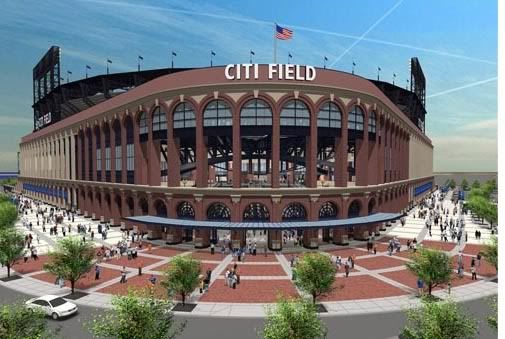
Citi/Taxpayer Field?
Let's all say this together -- Political Ploy!
Also, does this mean that all stadiums should be named ________/Taxpayer Field. If that's the case, wouldn't it become redundant? If it's redundant, then should we keep putting it on there anyway? Then again, shouldn't we keep it on there to remind the owners and everyone else that it is the taxpayers' field? Regardless, Pro Player/Taxpayer Stadium could have had a nice, tongue-twisting sound to it.
Varitek to Affect Teixeira?
No, seriously.
"it's interesting to wonder whether the Red Sox's chances to land star free agent first baseman Mark Teixeira could be hindered by their current impasse in negotiations involving his good friend Jason Varitek." "But if they budged a little in the case Varitek, it might help. It surely couldn't hurt."
This is poor baseball strategy. Teixeira is a Boras man and will take the best offer. Use the $9m you are about to give Varitek and add on another million to each year of Teixeira's contract. Case closed. Cease and desist (isn't that redundant? -- Craig, I need your help).
"it's interesting to wonder whether the Red Sox's chances to land star free agent first baseman Mark Teixeira could be hindered by their current impasse in negotiations involving his good friend Jason Varitek." "But if they budged a little in the case Varitek, it might help. It surely couldn't hurt."
This is poor baseball strategy. Teixeira is a Boras man and will take the best offer. Use the $9m you are about to give Varitek and add on another million to each year of Teixeira's contract. Case closed. Cease and desist (isn't that redundant? -- Craig, I need your help).
The CC Situation
When I saw the 6-year/$140m offer from the Yankees, I was sure that it was far-and-away the best offer. But I've seen some interesting posts about how the Yankees' deal really isn't that far away from anyone else's possible offers (it seems the Angels are about to make that a concrete offer) for reasons such as living expenses, taxes, charities, and promotional deals. I started thinking about it and polled you all to find out how you would deal with the situation. A few said you'd take the $140m dollars because that is a lot of money, and I can't blame anyone based on that (I would probably do the same). This argument about it not being so much more kind of takes that down a notch. The rest seemed to think New York is a bit of a headache, whether it's the pressure, Hank, or the inordinate amount of pressure. Granted, if you aren't getting above-and-beyond what other people are offering, then the pressure and Hank seem to be stresses you don't have to cope with. As things heat up with CC, let's take a look at this situation.
First, the Yankees offered a huge contract in a presumed TKO power-punch after the Brewers had bid an underwhelming but substantial 5-year/$100m. The Brewers made a legitimate offer, but no one really thought anything of it. Everyone was preoccupied with the Yankees' shiny offer that tops the Johan contract by about $2.3m total. People saw the number and thought no one can offer CC that much money, and it was a sure thing he would sign. Then, CC waited, people came out with reports on how the money really isn't that much more than what someone else could offer, and people mentioned CC's desire to return to California. Hank got a little scared and gave his "deadline", which really isn't much of one.
Now, the Angels are ready to make an offer which would presumably be at least the 5-year deal from the Brewers. My guess is that the Angels don't want to go six years, and they will instead settle for giving him a 5-year/$120m offer. That's $24m a year. If CC has that, it seems it would be better to take that deal, pitch a few good years, come out of it at the age of 33 or 34 and get a shiny new contract while playing at home. Of course, I don't know that the Angels will go that high, but let's say they offer $110m instead. Then, they are just under the Yankees and still have the "hometown advantage". Does he take it then? Or does he wait for the other California teams to jump in. If the Angels start the bidding, the Dodgers and Giants have shown they are afraid of his price-tag and have shown interest. Then, it becomes a bidding war among the California teams making the Angels, or someone, go to that $24m/year plateau.
What comes next is the real uncertainty? Does CC show that his interest in the Yankees was really to ensure more money from the California teams or is this CC drumming up his California interest to get more money from the Yankees? It's brilliant if you think about it.
Let's look at scenario one. He really wants to go to California, but if he took out the Yankees, he's looking at a $18-20m/year offer from the California teams. He knows he's worth more, so he lets the Yankees bid. This is what most people expect is going on. By also getting the Yankees involved, he knows he'll still get a really good offer that he'd be okay with accepting. If this is the case, he is succeeding. The Angels are about to play the game, and you know they have to give a really good offer. They were going to spend $20m on Teixeira, so they have the cash. Now that the offers are close, he can take what he wants. Then, the Yankees counter-offer, and the Angels (or Giants or Dodgers) must respond. Or maybe they won't. CC just got his big offer from his California team.
However, let's look at scenario two. He doesn't care where he plays and he just wants the money (insert Jason and it is about the money, stupid). It's perfectly plausible and reasonable. Here, he knows the Yankees are going to give him a lot of money, but he wants more. Therefore, he lets slip that he wants to play in California. The Yankees insert incredibly ridiculous deal. But, CC keeps up the charade. He's not biting just yet. He's in the perfect position. He's the best free-agent on the market, and the Yankees just showed how much they need the big ace (pun intended) by not being able to handle life without Wang (insert you know what) and relying on a career season from Mussina, who was unlikely to repeat that. So, CC keeps thinking about California. The Angels, Giants, and/or Dodgers get involved and make the offers close because they know they have to. They want him to. They aren't driving up the price. That's something only the Red Sox would do and could get away with (Why aren't they bidding?). Now, CC keeps letting people think he would like to play in California. The Yankees get nervous, revoke the "deadline", and up the offer to 7 years/$180m. Ridiculous, right? Wrong! Add in the extra $22m for the next year, and the remaining $18m is spread evenly over the previous six years to make it far-and-away the best offer. It's the only way for the Yankees to win if CC wants to go back to California. Except he doesn't really. He wants the money, and he just played the Yankees into giving him a buttload. Cashman wants that starting pitcher, and CC seems a much more sure thing than anyone else in the market. Will the Angels/Giants/Dodgers respond? Probably not. The Angels realize Tex was a better fit anyway. The Giants know they need offense, too. The Dodgers happily bring back Manny because he's already a fan-favorite anyway. But CC still has the golden offer.
I don't know what's going on in CC's head. No one does. That's what makes this perfect. He is going to rake in a lot of money this winter. But for now, he'll go home to California for Thanksgiving stress-free while the Yankees and Angels sweat it out. They can't bluff, but CC can.
First, the Yankees offered a huge contract in a presumed TKO power-punch after the Brewers had bid an underwhelming but substantial 5-year/$100m. The Brewers made a legitimate offer, but no one really thought anything of it. Everyone was preoccupied with the Yankees' shiny offer that tops the Johan contract by about $2.3m total. People saw the number and thought no one can offer CC that much money, and it was a sure thing he would sign. Then, CC waited, people came out with reports on how the money really isn't that much more than what someone else could offer, and people mentioned CC's desire to return to California. Hank got a little scared and gave his "deadline", which really isn't much of one.
Now, the Angels are ready to make an offer which would presumably be at least the 5-year deal from the Brewers. My guess is that the Angels don't want to go six years, and they will instead settle for giving him a 5-year/$120m offer. That's $24m a year. If CC has that, it seems it would be better to take that deal, pitch a few good years, come out of it at the age of 33 or 34 and get a shiny new contract while playing at home. Of course, I don't know that the Angels will go that high, but let's say they offer $110m instead. Then, they are just under the Yankees and still have the "hometown advantage". Does he take it then? Or does he wait for the other California teams to jump in. If the Angels start the bidding, the Dodgers and Giants have shown they are afraid of his price-tag and have shown interest. Then, it becomes a bidding war among the California teams making the Angels, or someone, go to that $24m/year plateau.
What comes next is the real uncertainty? Does CC show that his interest in the Yankees was really to ensure more money from the California teams or is this CC drumming up his California interest to get more money from the Yankees? It's brilliant if you think about it.
Let's look at scenario one. He really wants to go to California, but if he took out the Yankees, he's looking at a $18-20m/year offer from the California teams. He knows he's worth more, so he lets the Yankees bid. This is what most people expect is going on. By also getting the Yankees involved, he knows he'll still get a really good offer that he'd be okay with accepting. If this is the case, he is succeeding. The Angels are about to play the game, and you know they have to give a really good offer. They were going to spend $20m on Teixeira, so they have the cash. Now that the offers are close, he can take what he wants. Then, the Yankees counter-offer, and the Angels (or Giants or Dodgers) must respond. Or maybe they won't. CC just got his big offer from his California team.
However, let's look at scenario two. He doesn't care where he plays and he just wants the money (insert Jason and it is about the money, stupid). It's perfectly plausible and reasonable. Here, he knows the Yankees are going to give him a lot of money, but he wants more. Therefore, he lets slip that he wants to play in California. The Yankees insert incredibly ridiculous deal. But, CC keeps up the charade. He's not biting just yet. He's in the perfect position. He's the best free-agent on the market, and the Yankees just showed how much they need the big ace (pun intended) by not being able to handle life without Wang (insert you know what) and relying on a career season from Mussina, who was unlikely to repeat that. So, CC keeps thinking about California. The Angels, Giants, and/or Dodgers get involved and make the offers close because they know they have to. They want him to. They aren't driving up the price. That's something only the Red Sox would do and could get away with (Why aren't they bidding?). Now, CC keeps letting people think he would like to play in California. The Yankees get nervous, revoke the "deadline", and up the offer to 7 years/$180m. Ridiculous, right? Wrong! Add in the extra $22m for the next year, and the remaining $18m is spread evenly over the previous six years to make it far-and-away the best offer. It's the only way for the Yankees to win if CC wants to go back to California. Except he doesn't really. He wants the money, and he just played the Yankees into giving him a buttload. Cashman wants that starting pitcher, and CC seems a much more sure thing than anyone else in the market. Will the Angels/Giants/Dodgers respond? Probably not. The Angels realize Tex was a better fit anyway. The Giants know they need offense, too. The Dodgers happily bring back Manny because he's already a fan-favorite anyway. But CC still has the golden offer.
I don't know what's going on in CC's head. No one does. That's what makes this perfect. He is going to rake in a lot of money this winter. But for now, he'll go home to California for Thanksgiving stress-free while the Yankees and Angels sweat it out. They can't bluff, but CC can.
Is AJ Burnett Worth a Five-Year Deal?
With Sabathia only available to the big-market teams, AJ Burnett has become the next in line for the big deals. It seems as though people like him more than Derek Lowe. You can chalk that up to age and perceived belief in "stuff", but Lowe will get his due. Anyway, lots of teams are interested in Burnett and a contract with an annual salary of $15-16M will scare off some bidders, but there will be plenty of teams still in line (Braves, Phillies, Angels, Yankees, Red Sox, Blue Jays, Orioles, Nationals). With all of those teams able to pay the salary, the number of years becomes the next important part of the contract. Burnett's agent has stated that Burnett wants 5 years, and with a market where lots of teams are involved, someone will give Burnett the 5 year/$75-80M deal he covets. But should they?
At age 32 (next season), no one really believes Burnett will be worth it, but let's face it, no big-ticket free-agent really is worth the years and dollars they usually get. You pay for the first few years and hope to God that they are still serviceable for the last year or two. It's just understood, so stop thinking you'll get your player for the right price and amount of time. You have to add on the extra year to make sure you get him for the next 3 years (the years you would like to give him). So let's stop the generic "No pitcher is worth it" argument.
As for his talent, no one will deny Burnett could be an ace, especially for an NL team. If you're an AL team, he could be an ace, but he's more of a no.2, which is just fine thank you. His career FIP is 3.75, and it was a career-best 3.45 last season. That probably goes down in the NL, but as he ages, it will go back up. Do you want a mid-3 pitcher?
His K/9 is a very good 8.36, and his last two seasons have seen his rate climb to 9.56 and 9.39, which is pretty awesome. For the counter-part BB/9, Burnett has a pretty high 3.71 career mark that has been better the past two seasons (3.59 and 3.50) but not much better.
Was he just really lucky or unlucky last season? Well, his BABIP was .328 (unlucky), his LOB% was 70.5 (normal), and his HR/FB was 9.6% (normal but a little low), so his 4.04 ERA was really too high.
Even better for Burnett is that he is a ground-ball pitcher with a career 1.67 GB/FB and it was 1.52 last season. Ground-ball pitchers are more likely to age well considering they get guys to hit the ball into the ground. If you get a lot of fly balls, you start giving up more runs when that fastball loses a tick or two as guys can react better. Burnett is of the former.
Teams also like power-pitchers, and Burnett was fifth in average fastball speed with a 94.3 mph. That will start to drop, but he should be able to hold it for the next few years. At 36, he won't be able to, but we don't really want to worry about the future do we?
So, we know Burnett is a good pitcher, but I think we all knew that. It's the injuries that keep Burnett from getting $100M this winter. But we can't really predict injuries. I've always thought that if the X-rays and PET scans and MRI's and whatever the hell else people use come back clean, then you just have to go with it. Anyone can get hurt. However, I found an interesting pattern with Mr. Burnett. In 2001, he pitched 173.1 IP and then 204.1 the following season. That's a difference of 31 IP (remember the 30 IP rule?). The next two seasons saw him pitch 23 and 120 IP. The year after, he pitched 209 IP (+82 IP). Now, I realize the rule talks about being under 25 and under 30 innings from a previous career high, but it can't be good to go up 80 IP. That's a lot more work. It turns out it was as he only threw 135.1 IP the next season. He went u to 165.1 the next season (+30). That enabled him to throw 221.2 IP this past season as one of the only Blue Jays not affected by injuries. But, that was a 56.1 difference. Again, that seems a bit high for any pitcher to just throw the next season. Does that mean he's going to get hurt? Well, history and patterns say it's a good possibility, but do we really know? Has he reached the point in his career that he can make the jump and his arm withstand it? This was a more incremental increase than past increases, so maybe it will be okay.
So is he worth five years? Well, obviously not, but he is worth the $15-16M a season. That has to be the main question. He should be able to pitch well for the first three seasons (through age 34), and I'm betting there's at least one good season in the 35-36 range. Is it better to give Lowe a four-year deal knowing he'll be 40 at the end? I'd rather have Burnett who's still in a good time in his career. Lowe should decline and probably fairly rapidly whereas Burnett should decline but slowly. For giving the two essentially the same contract, go for Burnett, which is apparently what teams are doing. If you really want him, give him that fifth year.
At age 32 (next season), no one really believes Burnett will be worth it, but let's face it, no big-ticket free-agent really is worth the years and dollars they usually get. You pay for the first few years and hope to God that they are still serviceable for the last year or two. It's just understood, so stop thinking you'll get your player for the right price and amount of time. You have to add on the extra year to make sure you get him for the next 3 years (the years you would like to give him). So let's stop the generic "No pitcher is worth it" argument.
As for his talent, no one will deny Burnett could be an ace, especially for an NL team. If you're an AL team, he could be an ace, but he's more of a no.2, which is just fine thank you. His career FIP is 3.75, and it was a career-best 3.45 last season. That probably goes down in the NL, but as he ages, it will go back up. Do you want a mid-3 pitcher?
His K/9 is a very good 8.36, and his last two seasons have seen his rate climb to 9.56 and 9.39, which is pretty awesome. For the counter-part BB/9, Burnett has a pretty high 3.71 career mark that has been better the past two seasons (3.59 and 3.50) but not much better.
Was he just really lucky or unlucky last season? Well, his BABIP was .328 (unlucky), his LOB% was 70.5 (normal), and his HR/FB was 9.6% (normal but a little low), so his 4.04 ERA was really too high.
Even better for Burnett is that he is a ground-ball pitcher with a career 1.67 GB/FB and it was 1.52 last season. Ground-ball pitchers are more likely to age well considering they get guys to hit the ball into the ground. If you get a lot of fly balls, you start giving up more runs when that fastball loses a tick or two as guys can react better. Burnett is of the former.
Teams also like power-pitchers, and Burnett was fifth in average fastball speed with a 94.3 mph. That will start to drop, but he should be able to hold it for the next few years. At 36, he won't be able to, but we don't really want to worry about the future do we?
So, we know Burnett is a good pitcher, but I think we all knew that. It's the injuries that keep Burnett from getting $100M this winter. But we can't really predict injuries. I've always thought that if the X-rays and PET scans and MRI's and whatever the hell else people use come back clean, then you just have to go with it. Anyone can get hurt. However, I found an interesting pattern with Mr. Burnett. In 2001, he pitched 173.1 IP and then 204.1 the following season. That's a difference of 31 IP (remember the 30 IP rule?). The next two seasons saw him pitch 23 and 120 IP. The year after, he pitched 209 IP (+82 IP). Now, I realize the rule talks about being under 25 and under 30 innings from a previous career high, but it can't be good to go up 80 IP. That's a lot more work. It turns out it was as he only threw 135.1 IP the next season. He went u to 165.1 the next season (+30). That enabled him to throw 221.2 IP this past season as one of the only Blue Jays not affected by injuries. But, that was a 56.1 difference. Again, that seems a bit high for any pitcher to just throw the next season. Does that mean he's going to get hurt? Well, history and patterns say it's a good possibility, but do we really know? Has he reached the point in his career that he can make the jump and his arm withstand it? This was a more incremental increase than past increases, so maybe it will be okay.
So is he worth five years? Well, obviously not, but he is worth the $15-16M a season. That has to be the main question. He should be able to pitch well for the first three seasons (through age 34), and I'm betting there's at least one good season in the 35-36 range. Is it better to give Lowe a four-year deal knowing he'll be 40 at the end? I'd rather have Burnett who's still in a good time in his career. Lowe should decline and probably fairly rapidly whereas Burnett should decline but slowly. For giving the two essentially the same contract, go for Burnett, which is apparently what teams are doing. If you really want him, give him that fifth year.
Wednesday Whispers
Sorry that I've been AWOL for a few days. I was sick this past weekend, and I had to go to class and drive back to Louisville for the holidays. Anyway, there should be a couple things up today, but I don't know about tomorrow. Friday and Saturday should have a few things up as well.
- Robinson Cano is looking good this off-season. The question is can he continue to be as disciplined when he goes back to the city that never sleeps.
- It seems that Junichi Tazawa will be a Red Sox. Because the Red Sox have to have everything go right for them.
- Rocco Baldelli won the Conigliari Award for his determination and spirit. That might have been the easiest award selection of the year.
- Peter Schmuck says the Orioles will have to change their organizational philosophy to sign AJ Burnett. Considering their philosophy seems to be to lose, changing it might not be a bad idea.
- The Canadian economy is leaving Ricciardi in a state of uncertainty. So is his starting rotation.
- The Royals' top 10 prospects are filled with the guys from the last draft. I agree with the author -- that either means they have nothing on the way or their draft was that good.
- The Tigers will pass on Tazawa because of the gentleman's agreement. If they really cared about the agreement, wouldn't they have not gone over and scouted him?
- Furcal visited Oakland yesterday, but it doesn't sound like anything's imminent.
- The Angels are switching their attention to CC. Told you they don't need Tex.
- The Braves are switching their focus to AJ Burnett. Post idea!
- The Marlins' new stadium will open in 2012, just in time to save Maybin from being shipped off but too late for Andrew Miller, Dan Uggla, Jorge Cantu, Matt Lindstrom, Ricky Nolasco, Josh Johnson, Anibal Sanchez, and the Manatees.
- The Pirates signed the two Indian pitchers. Good, now the Pirates have more pitchers who won't make it to the majors.
- Would you rather have 50 fields or CC?
- Robinson Cano is looking good this off-season. The question is can he continue to be as disciplined when he goes back to the city that never sleeps.
- It seems that Junichi Tazawa will be a Red Sox. Because the Red Sox have to have everything go right for them.
- Rocco Baldelli won the Conigliari Award for his determination and spirit. That might have been the easiest award selection of the year.
- Peter Schmuck says the Orioles will have to change their organizational philosophy to sign AJ Burnett. Considering their philosophy seems to be to lose, changing it might not be a bad idea.
- The Canadian economy is leaving Ricciardi in a state of uncertainty. So is his starting rotation.
- The Royals' top 10 prospects are filled with the guys from the last draft. I agree with the author -- that either means they have nothing on the way or their draft was that good.
- The Tigers will pass on Tazawa because of the gentleman's agreement. If they really cared about the agreement, wouldn't they have not gone over and scouted him?
- Furcal visited Oakland yesterday, but it doesn't sound like anything's imminent.
- The Angels are switching their attention to CC. Told you they don't need Tex.
- The Braves are switching their focus to AJ Burnett. Post idea!
- The Marlins' new stadium will open in 2012, just in time to save Maybin from being shipped off but too late for Andrew Miller, Dan Uggla, Jorge Cantu, Matt Lindstrom, Ricky Nolasco, Josh Johnson, Anibal Sanchez, and the Manatees.
- The Pirates signed the two Indian pitchers. Good, now the Pirates have more pitchers who won't make it to the majors.
- Would you rather have 50 fields or CC?
23 November 2008
Do the Angels Really Need Teixeira?
Before you say it, let's not go into whether they would be better with him or without him. We all know the Angels would like to have the clean-up hitter and Gold Glove first baseman, but Nick Cafardo and others have stated the Angels need Teixeira. But do they really?
First, Teixeira is going to cost $20M for the next 8-10 years. That's a lot of money and a lot of years. If you want to give such a deal to someone, Teixeira is the man to give it to. He's talented, durable, and plays a position where guys usually age fairly well. However, just because he might be the best bet doesn't mean you should give it to him. There are still risks. What happens if he slips on some ice outside of his house and breaks something? What if he gets hurt? A knee ligament or hamstring could easily pop and cause chronic problems. Do you need that headache?
Second, the Angels haven't had that big hitter in years, and yet, they still win. Teixeira didn't get them to the playoffs. This is a team built to win, and they have the talent to do it, even without the slugger.
Third, there are other options. Internally, Kendry Morales is ready now. Matthew Brown? Mark Trumbo? Next year, Adam LaRoche could be on the market. Is Teixeira better than all those players? Definitely. But is he worth that huge contract when there are other good options that would be much cheaper?
Fourth, the Angels could use the money for pitching. Next year, they'll have a staff of John Lackey, Ervin Santana, Joe Saunders, Jered Weaver, and someone else. Let's not talk about Peavy. Nothing seems to be going on there. But, with the staff they already have, they just need a decent guy for spot 5. They even have Nick Adenhart, who struggled last season but that happens when the guy is 21. Let's say that John Lackey's feelings are accurate and he gets an extension. Next season, they could add one of Josh Beckett, Rich Harden, or Brett Myers to make the staff better.
Fifth, the biggest concern is Vladimir Guerrero. If they can't bring him back, then they need to replace him. Next year, Jason Bay, Rick Ankiel, Matt Holliday, and Xavier Nady could be available. Matt Holliday would require a Teixeira-like contract, so let's cross him off the list because I think we'd all prefer Teixeira. But the others could fill in and give you around as much production as Guerrero has over the past few seasons. With a better defensive outfielder, that opens up the DH spot.
Do the Angels need Teixeira? No, but I do believe they'd prefer to keep him. He'll probably be in the MVP discussion for the next 3-5 years and be pretty good for the remainder. He does fill the hole the Angels believe they have in their perfect team, but if he didn't make the difference this year, when will he?
First, Teixeira is going to cost $20M for the next 8-10 years. That's a lot of money and a lot of years. If you want to give such a deal to someone, Teixeira is the man to give it to. He's talented, durable, and plays a position where guys usually age fairly well. However, just because he might be the best bet doesn't mean you should give it to him. There are still risks. What happens if he slips on some ice outside of his house and breaks something? What if he gets hurt? A knee ligament or hamstring could easily pop and cause chronic problems. Do you need that headache?
Second, the Angels haven't had that big hitter in years, and yet, they still win. Teixeira didn't get them to the playoffs. This is a team built to win, and they have the talent to do it, even without the slugger.
Third, there are other options. Internally, Kendry Morales is ready now. Matthew Brown? Mark Trumbo? Next year, Adam LaRoche could be on the market. Is Teixeira better than all those players? Definitely. But is he worth that huge contract when there are other good options that would be much cheaper?
Fourth, the Angels could use the money for pitching. Next year, they'll have a staff of John Lackey, Ervin Santana, Joe Saunders, Jered Weaver, and someone else. Let's not talk about Peavy. Nothing seems to be going on there. But, with the staff they already have, they just need a decent guy for spot 5. They even have Nick Adenhart, who struggled last season but that happens when the guy is 21. Let's say that John Lackey's feelings are accurate and he gets an extension. Next season, they could add one of Josh Beckett, Rich Harden, or Brett Myers to make the staff better.
Fifth, the biggest concern is Vladimir Guerrero. If they can't bring him back, then they need to replace him. Next year, Jason Bay, Rick Ankiel, Matt Holliday, and Xavier Nady could be available. Matt Holliday would require a Teixeira-like contract, so let's cross him off the list because I think we'd all prefer Teixeira. But the others could fill in and give you around as much production as Guerrero has over the past few seasons. With a better defensive outfielder, that opens up the DH spot.
Do the Angels need Teixeira? No, but I do believe they'd prefer to keep him. He'll probably be in the MVP discussion for the next 3-5 years and be pretty good for the remainder. He does fill the hole the Angels believe they have in their perfect team, but if he didn't make the difference this year, when will he?
Best Pitcher in the Game
The poll gave Tim Lincecum the most votes with Johan Santana and Roy Halladay tied for second. I was a little surprised to see no love for CC Sabathia because I think he deserves to be a part of the discussion. Jake Peavy received a vote, and I think the backlash against him is just because he's up for being traded and has been overanalyzed. Brandon Webb might deserve to be here as well. What makes this discussion more difficult is that Lincecum is so young. I'm sure if you looked at this discussion after a couple years of Dontrelle Willis, you would have mentioned him here. Santana, Halladay, Sabathia, Webb and Peavy have been doing it for a little longer. There are a lot of differences between Lincecum and Willis, but it's pretty uncertain that he can keep this up. We know the others can. Regardless, what makes a good pitcher? Let's start with striking out a lot of hitters, walking few, pitching a lot of innings, being a groundball guy, and, of course, keeping the other team off the scoreboard. Let's take a look.
ERA --> Lincecum 3.16, Webb 3.24, Peavy 3.25, Halladay 3.52, Santana 3.11, Sabathia 3.66
This is a tough discussion. ERA isn't the most perfect stat. How do you rank these guys here? Santana has the best ERA, and considering he pitched most of that in the AL, he should be number one. Lincecum is second, but is he the 4.00 or 2.62 ERA guy? Webb and Peavy are close, but considering Webb pitches in a pitcher's park, he has to be the better choice. I would also put Halladay above Peavy considering the difference in leagues and parks. Sabathia may have to be last in this group.
Santana -> Lincecum -> Webb -> Halladay -> Peavy -> Sabathia
FIP --> Lincecum 3.01, Webb 3.48, Peavy 3.50, Halladay 3.53, Santana 3.34, Sabathia 3.62
FIP should be more accurate as far as pitching talent is concerned, but it still doesn't account for leagues and parks. Lincecum seems far-and-away the best here, but his two years again make me hesitate. Santana has to be next. Webb again is better than Peavy, but Halladay jumps him here due to the difference between the AL East and NL West. Sabathia beats Peavy.
Lincecum -> Santana -> Halladay -> Webb -> Sabathia -> Peavy
IP/season --> Lincecum 186.2, Webb 219.1, Peavy 180.1, Halladay 192, Santana 202, Sabathia 207.1
This is tricky considering some of these guys have been relievers/starters before becoming full-time starters (Halladay, Santana), but don't say anything about partial seasons because all but Sabathia have had a few. Halladay's is low because he had some short seasons in '04 and '05. Santana, Webb, and Sabathia are the head guys here ratio-wise, and even though Halladay is considered the perfect inning-eater, he's had his durability concerns as well. Sabathia has also become a horse, but he wasn't before the past two seasons.
Webb -> Santana -> Halladay -> Sabathia -> Lincecum -> Peavy
K/9 --> Lincecum 10, Webb 7.27, Peavy 8.96, Halladay 6.41, Santana 9.26, Sabathia 7.56
This one's easier to figure out. Strikeouts are important because there really isn't any chance the other team gets on and can do damage (I realize it's possible, but it doesn't happen enough to be a concern). Lincecum gets the victory, but Halladay had a much lower ratio than I thought he would have.
Lincecum -> Santana -> Peavy -> Sabathia -> Webb -> Halladay
BB/9 --> Lincecum 3.59, Webb 2.96, Peavy 2.90, Halladay 2.09, Santana 2.49, Sabathia 2.84
Walks kill, and whatever Halladay lost in the K/9, he regained in the BB/9. You wonder if Lincecum's will come down any the longer he goes.
Halladay -> Santana -> Sabathia -> Peavy -> Webb -> Lincecum
K/BB --> Lincecum 2.79, Webb 2.45, Peavy 3.09, Halladay 3.06, Santana 3.72, Sabathia 2.66
You had to know Santana would be dominant here. Having a big ratio is good because strikeouts can make up for those pesky walks. Halladay beats out Peavy because of the whole pitchers suck at hitting thing.
Santana -> Halladay -> Peavy -> Lincecum -> Sabathia -> Webb
GB/FB --> Lincecum 1.25, Webb 3.57, Peavy 1.08, Halladay 2.36, Santana 0.90, Sabathia 1.26
Groundballs are important because they can't go out of the park. Being a flyball-pitcher makes one susceptible to the variations of HR/FB that can wildly change your ERA and to the type of ballpark you pitch in. Getting groundballs is a surer way of getting outs even though it does mean that you need a good defense behind you. Preferably, the best pitcher would both strikeout a lot of guys and get groundballs. The two best at getting groundballs are the worst in strikeouts. Interesting (more double-plays? more inclined to put the ball over the plate?). This is the first category Santana has been deficient in, but his amazing change-up will get more flyballs but that aren't hit as hard.
Webb -> Halladay -> Sabathia -> Lincecum -> Peavy -> Santana
LD% --> Lincecum 18.6, Webb 17.7, Peavy 19.7, Halladay 18.8, Santana 19.7, Sabathia 20.5
The reverse of hitting, a lower line-drive percentage is good for pitchers. It indicates (not proves) that a pitcher is better because guys aren't able to hit him hard. If they don't hit him hard, they are less-likely to get hits, home runs. Webb's sinker seems to be doing the trick here. I'll give Halladay the edge over Lincecum because Halladay doesn't get to face pitchers, who generally can't hit (Santana beats Peavy for the same reason)
Webb -> Halladay -> Lincecum -> Santana -> Peavy -> Sabathia
WHIP --> Lincecum 1.21, Webb 1.24, Peavy 1.19, Halladay 1.21, Santana 1.10, Sabathia 1.24
Baserunners are the only way to score, so keeping them off the basepaths is a good thing. The pitchers are surprisingly close, with the exception of Santana, but I guess it shouldn't be too much of a surprise. Halladay and Sabathia leap-frog the NL guys because of the DH.
Santana -> Halladay -> Sabathia -> Peavy -> Lincecum -> Webb
BABIP --> Lincecum .306, Webb .294, Peavy .295, Halladay .297, Santana .286, Sabathia .297
BABIP can be wildly inconsistent from year-to-year, but theoretically over a career, it should even out (maybe the reason Lincecum's is so much higher). Santana, again, is dominant. Halladay and Sabathia get to skip ahead, but Halladay wins because the AL East is a bit better offensively, generally.
Santana -> Halladay -> Sabathia -> Webb -> Peavy -> Lincecum
LOB% --> Lincecum 74.4, Webb 72.6, Peavy 77.6, Halladay 71.4, Santana 77.3, Sabathia 72.6
Leaving guys on base is good because they don't score, but this metric can be quite volatile as well as BABIP. Halladay surprisingly won this. Does that mean he's better at keeping guys from scoring?
Halladay -> Sabathia -> Webb -> Lincecum -> Santana -> Peavy
This isn't an exact science. We all know that. Defenses, leagues, and divisions can make big differences in this discussion. As for the final analysis, it gets difficult. Lincecum was the best pitcher in the NL this season (based on the Cy Young Award -- a poor way to tell I know, but hold on), and if he was better than Santana and we can agree that Santana was the best in the AL, then isn't Lincecum the best? But how can we really tell? Lincecum got pretty lucky this past season (5.6 HR/FB), but his FIP says his ERA is right on target. Lincecum's tenure makes this difficult. Given that, Santana might be better because he's done it for longer (even though his FIP was almost a run higher this past season). As for the others, can we discount Sabathia because he wasn't that good before this past season? Can we discount Peavy and Webb because they frequently come up at the end of these metrics? Can we take Halladay out because it always seemed that Santana was indeed better? If you want the immediate "Who's better right now?", then Sabathia cannot be discounted. The thing is that track record does matter. Doing it for one or two years isn't enough to say you are the best pitcher, otherwise Cliff Lee and Ryan Dempster have to be in the discussion as a result of their past seasons. But that's kind of a poor way to look at it. Sabathia comes in third. Halladay does get kicked out because Santana was always clearly better. I doubt you could make the argument that Webb or Peavy are better than Santana.
So it comes down to Santana and Lincecum. When we look back at the stats, Santana is almost always in the top 2 pitchers while Lincecum bounces around a lot. I know Lincecum was voted the best in the NL Cy Young voting, but Santana is the better pitcher, even if he may not have been over the past season. In fact, this past season seems to have made things closer.
Addendum (2:50 PM): I just realized there might be a more mathematical way of doing this. Let's give the pitcher 6 points for being the best, 5 for second, and so on. The rankings end up.
Santana: 50
Halladay: 49
Webb: 38
Lincecum: 36
Sabathia: 33
Peavy: 25
Interesting. I have no idea what this means, if anything at all.
ERA --> Lincecum 3.16, Webb 3.24, Peavy 3.25, Halladay 3.52, Santana 3.11, Sabathia 3.66
This is a tough discussion. ERA isn't the most perfect stat. How do you rank these guys here? Santana has the best ERA, and considering he pitched most of that in the AL, he should be number one. Lincecum is second, but is he the 4.00 or 2.62 ERA guy? Webb and Peavy are close, but considering Webb pitches in a pitcher's park, he has to be the better choice. I would also put Halladay above Peavy considering the difference in leagues and parks. Sabathia may have to be last in this group.
Santana -> Lincecum -> Webb -> Halladay -> Peavy -> Sabathia
FIP --> Lincecum 3.01, Webb 3.48, Peavy 3.50, Halladay 3.53, Santana 3.34, Sabathia 3.62
FIP should be more accurate as far as pitching talent is concerned, but it still doesn't account for leagues and parks. Lincecum seems far-and-away the best here, but his two years again make me hesitate. Santana has to be next. Webb again is better than Peavy, but Halladay jumps him here due to the difference between the AL East and NL West. Sabathia beats Peavy.
Lincecum -> Santana -> Halladay -> Webb -> Sabathia -> Peavy
IP/season --> Lincecum 186.2, Webb 219.1, Peavy 180.1, Halladay 192, Santana 202, Sabathia 207.1
This is tricky considering some of these guys have been relievers/starters before becoming full-time starters (Halladay, Santana), but don't say anything about partial seasons because all but Sabathia have had a few. Halladay's is low because he had some short seasons in '04 and '05. Santana, Webb, and Sabathia are the head guys here ratio-wise, and even though Halladay is considered the perfect inning-eater, he's had his durability concerns as well. Sabathia has also become a horse, but he wasn't before the past two seasons.
Webb -> Santana -> Halladay -> Sabathia -> Lincecum -> Peavy
K/9 --> Lincecum 10, Webb 7.27, Peavy 8.96, Halladay 6.41, Santana 9.26, Sabathia 7.56
This one's easier to figure out. Strikeouts are important because there really isn't any chance the other team gets on and can do damage (I realize it's possible, but it doesn't happen enough to be a concern). Lincecum gets the victory, but Halladay had a much lower ratio than I thought he would have.
Lincecum -> Santana -> Peavy -> Sabathia -> Webb -> Halladay
BB/9 --> Lincecum 3.59, Webb 2.96, Peavy 2.90, Halladay 2.09, Santana 2.49, Sabathia 2.84
Walks kill, and whatever Halladay lost in the K/9, he regained in the BB/9. You wonder if Lincecum's will come down any the longer he goes.
Halladay -> Santana -> Sabathia -> Peavy -> Webb -> Lincecum
K/BB --> Lincecum 2.79, Webb 2.45, Peavy 3.09, Halladay 3.06, Santana 3.72, Sabathia 2.66
You had to know Santana would be dominant here. Having a big ratio is good because strikeouts can make up for those pesky walks. Halladay beats out Peavy because of the whole pitchers suck at hitting thing.
Santana -> Halladay -> Peavy -> Lincecum -> Sabathia -> Webb
GB/FB --> Lincecum 1.25, Webb 3.57, Peavy 1.08, Halladay 2.36, Santana 0.90, Sabathia 1.26
Groundballs are important because they can't go out of the park. Being a flyball-pitcher makes one susceptible to the variations of HR/FB that can wildly change your ERA and to the type of ballpark you pitch in. Getting groundballs is a surer way of getting outs even though it does mean that you need a good defense behind you. Preferably, the best pitcher would both strikeout a lot of guys and get groundballs. The two best at getting groundballs are the worst in strikeouts. Interesting (more double-plays? more inclined to put the ball over the plate?). This is the first category Santana has been deficient in, but his amazing change-up will get more flyballs but that aren't hit as hard.
Webb -> Halladay -> Sabathia -> Lincecum -> Peavy -> Santana
LD% --> Lincecum 18.6, Webb 17.7, Peavy 19.7, Halladay 18.8, Santana 19.7, Sabathia 20.5
The reverse of hitting, a lower line-drive percentage is good for pitchers. It indicates (not proves) that a pitcher is better because guys aren't able to hit him hard. If they don't hit him hard, they are less-likely to get hits, home runs. Webb's sinker seems to be doing the trick here. I'll give Halladay the edge over Lincecum because Halladay doesn't get to face pitchers, who generally can't hit (Santana beats Peavy for the same reason)
Webb -> Halladay -> Lincecum -> Santana -> Peavy -> Sabathia
WHIP --> Lincecum 1.21, Webb 1.24, Peavy 1.19, Halladay 1.21, Santana 1.10, Sabathia 1.24
Baserunners are the only way to score, so keeping them off the basepaths is a good thing. The pitchers are surprisingly close, with the exception of Santana, but I guess it shouldn't be too much of a surprise. Halladay and Sabathia leap-frog the NL guys because of the DH.
Santana -> Halladay -> Sabathia -> Peavy -> Lincecum -> Webb
BABIP --> Lincecum .306, Webb .294, Peavy .295, Halladay .297, Santana .286, Sabathia .297
BABIP can be wildly inconsistent from year-to-year, but theoretically over a career, it should even out (maybe the reason Lincecum's is so much higher). Santana, again, is dominant. Halladay and Sabathia get to skip ahead, but Halladay wins because the AL East is a bit better offensively, generally.
Santana -> Halladay -> Sabathia -> Webb -> Peavy -> Lincecum
LOB% --> Lincecum 74.4, Webb 72.6, Peavy 77.6, Halladay 71.4, Santana 77.3, Sabathia 72.6
Leaving guys on base is good because they don't score, but this metric can be quite volatile as well as BABIP. Halladay surprisingly won this. Does that mean he's better at keeping guys from scoring?
Halladay -> Sabathia -> Webb -> Lincecum -> Santana -> Peavy
This isn't an exact science. We all know that. Defenses, leagues, and divisions can make big differences in this discussion. As for the final analysis, it gets difficult. Lincecum was the best pitcher in the NL this season (based on the Cy Young Award -- a poor way to tell I know, but hold on), and if he was better than Santana and we can agree that Santana was the best in the AL, then isn't Lincecum the best? But how can we really tell? Lincecum got pretty lucky this past season (5.6 HR/FB), but his FIP says his ERA is right on target. Lincecum's tenure makes this difficult. Given that, Santana might be better because he's done it for longer (even though his FIP was almost a run higher this past season). As for the others, can we discount Sabathia because he wasn't that good before this past season? Can we discount Peavy and Webb because they frequently come up at the end of these metrics? Can we take Halladay out because it always seemed that Santana was indeed better? If you want the immediate "Who's better right now?", then Sabathia cannot be discounted. The thing is that track record does matter. Doing it for one or two years isn't enough to say you are the best pitcher, otherwise Cliff Lee and Ryan Dempster have to be in the discussion as a result of their past seasons. But that's kind of a poor way to look at it. Sabathia comes in third. Halladay does get kicked out because Santana was always clearly better. I doubt you could make the argument that Webb or Peavy are better than Santana.
So it comes down to Santana and Lincecum. When we look back at the stats, Santana is almost always in the top 2 pitchers while Lincecum bounces around a lot. I know Lincecum was voted the best in the NL Cy Young voting, but Santana is the better pitcher, even if he may not have been over the past season. In fact, this past season seems to have made things closer.
Addendum (2:50 PM): I just realized there might be a more mathematical way of doing this. Let's give the pitcher 6 points for being the best, 5 for second, and so on. The rankings end up.
Santana: 50
Halladay: 49
Webb: 38
Lincecum: 36
Sabathia: 33
Peavy: 25
Interesting. I have no idea what this means, if anything at all.
Sunday Spiels
That doesn't look all that weird.
It's been an interesting weekend. I've been around to a lot of places, but I haven't really felt well, so when I get home, I don't feel like doing anything but sitting on the couch. Oh well, my energy has returned, and there should be some stuff up today.
- Other really short MVP's. Every time I see Joe Morgan's name next to MVP or Hall of Fame, I just can't believe it. He's so terrible as a broadcaster.
- The LA teams need to keep their big hitters. I'm not so sure. I think both would be just fine without them.
- Teixeira wants to know where he's headed by Christmas. I'm gonna say Seattle.
- Jeff Larish is unorthodox, but he can hit. I need to find a picture.
- The AL Central has been busy so far, with the exception of the Twins. How many Royals fan wish Moore was sitting this one out as well?
- The Phillies won the World Series, so they don't need any awards. Says the team that won the World Series but doesn't have any awards.
- The new Glendale Spring Training ballpark has a name: Camelback Park. I will stop myself from making the 12 different jokes I could make regarding that name in the sake of propriety.
- Chad Billingsley slipped on some ice and came away with a bad break. Pun! But seriously, he's going to be fine and ready to start his preparation on time. Stop talking about how this affects the Dodgers off-season plans because it doesn't.
- Is baseball going back to being a speed-based sport?
- After always talking about how CC will go to California, Olney now thinks LeBron can make CC go to New York. Would you make up your mind Buster!
22 November 2008
Saturday Sagas
- Junichi Tazawa threw a complete-game shutout last night for his Japanese team. His price tag just went up a tick.
- The economy is causing problems with getting naming rights for a new stadium. No, not any of the ones in New York.
- I spoke too soon. Citi Field is kind of a crappy name anyway.
- The Marlins can begin building a new stadium, but when will it be ready? Considering the other problems people are having, Dolphin Stadium is looking pretty good right now.
- Lou Pinella opens up about some things going on with the Cubs. Is he really going to let Gregg close over Marmol?
- The D-Backs offered Ramon Vazquez a contract. There are other options for second base, but he's cheap and effective enough.
- Joe Beimel's days in LA are over. Kuo and Stults make Beimel expendable. Good decision.
- What happens if the Yankees whiff on the free-agent pitchers? It's a legitimate possibility regardless of the Yankees' money.
21 November 2008
Things I Love about Baseball
Baseball is my favorite sport. Football comes second, but I don't obsess about it nearly as much as I do about baseball. If the Braves lose, it's not a good idea to pick a fight with me later that night. If the Cowboys lose, I'll get over it in about 5 seconds. I continuously look at baseball sights deep into the winter, but I rarely even look at football sites even during the season. I'd much rather watch the World Series than the Super Bowl (the commercials have really sucked lately). Basketball is a distant third. Golf probably comes after that, but not by much. I easily play more golf, and it's debatable that I watch more basketball. Bowling comes next, but that's because I've done it since I was like two. But what is it that makes baseball so special? Why is it that good?
(not necessarily in any particular order)
1) It's the hardest game to play. Try and hit a 90 mph fastball, a sharp curve, or a low-and-away slider. It's not easy. Now, try throwing one. It's not a whole lot easier. I can beef up and block. I can throw a spiral. I can shoot a three. To play the game, you must have the right mixture of athleticism, reactions, and effort. It means failing 70% of the time. It means throwing 100 balls in order to get 21 outs and still not be done.
2) You can relate to the players. In basketball, you have to be 6'3" (no Pedroias, unless you count Mugsy), and in football, you have to be ripped and 250 lbs. while running at least a 4.5 40 yard dash. In baseball, you have Greg Maddux, CC Sabathia, David Wells, and David Ortiz. It's not like they aren't good athletes. They are. They just look like us. They don't look so impossible to be. We can't all be 6'7". We can't all be ripped out of our minds. But we can be Greg Maddux, as difficult as that is.
3) Jumbo Pretzels. A well-made Jumbo Pretzel may be the best thing on Earth. It has to be soft but not squishy and underdone. It has to have salt but not to the extent you wonder if you bought a piece of bread or a mine somewhere in Latin America. This point isn't so much about a pretzel as it is about concession stand food. It's not four-star cuisine. It's not good for you. It's over-priced. But it just feels right. It's sitting outside on a warm summer's day grabbing a hot dog that no one should know how it was made and a soft drink (or beer if you prefer) that is too large to allow you to make it through the sixth inning without having to run to the bathroom to pee in a restroom that you wonder whether or not it would be a better idea to hold it and risk sepsis. Other sports have concession foods, but it's not the same inside watching guys who are in much better shape or outside freezing your tush off.
4) Turnstiles. We've all had those moments with the darn things. You try to walk through it, and it hasn't been WD-40'd in like a year so you semi-fall through. You don't quite fall, but you left in this incredibly awkward position, not falling but only because the turnstile refuses to let you. Instead, everyone watches, wanting to laugh but understanding the feeling. It doesn't matter how coordinated you are. They will get you. And I love them.
5) How perfect is a baseball field? You have to cut the grass correctly and sometimes in a nice pattern. You have to rake the infield. You have to brush off the plate. You have to chalk the lines. It's a lot of work, and if you've ever done it, you fully appreciate the groundscrew for the underappreciated work they do. It's like every game is a brand new game. You see the divots in football fields, and honestly, I could mow a rectangular field. A basketball court needs to be waxed and broomed, but it doesn't need that much maintenance. And then, the smells. Who doesn't like freshly-cut grass? I have allergies and still love it. A perfectly groomed baseball field is a wonderful thing.
6) The strategy. All sports have strategy. But understanding pitches, counts, situations, matchups, and all that jazz keeps you into it. If you don't understand, then baseball is going to be boring, but if you do understand, the game goes by too fast, especially in the late innings. In between pitches, you wonder what he'll throw, will the runner steal, is the defense in the right spot, etc., and before you know it, the dumb pitcher has thrown it. In football, there's a play clock. In basketball, there's a shot clock. But there's not such thing in baseball. It's a grudge match between the hitter and pitcher. Are you ready to hit this? I can stand out here all day. I'll make you wait. It's wonderful.
7) Keeping score. You can't do this in other sports. There's too much to watch. Who went where, who bit on the fake, who missed an assignment. In baseball, you know where the action is. You then keep a record of it on a sheet of paper with a bunch of diamonds that continually remind you that you're in your favorite place watching your favorite sport. Where did the guy hit it last? Right field -- F9. Try and remember where the shooter has made or missed his shots. Oh, and the numbers. 1 for pitcher, 2 for catcher, etc. It gives the game a nice simplicity and elegance. How good is it to say a 4-6-3 double-play and have everyone perfectly understand?
8) The grace. Baseball is one of the most poetic sports. I imagine it has the most poems written about it. You can write about it in so many ways. How graceful is Griffey's swing! How well did that second baseman turn that double-play! Heck, even the throw around after an out is graceful when done well. What else? The curves of a pitch, the look of the field, a nice slide.
9) The 162 game schedule. I know we all think it's long, but it's 162 games of our favorite sport. It's played every night. We don't have to wait all week for it. It's not over in less than four months. It's like a good novel you don't want to end. It's like watching The Dark Knight and hoping there's another bad guy so it will keep going. It's long and it sucks when our team does, but it makes it all the sweeter when your team makes it (unless you're a Royals, Pirates, Nationals, Orioles fan -- what wonderful people). It's the ultimate example of weeding out the good from the bad.
10) It's the first sport you can teach your kids. Football is kind of difficult when youre kid can't throw a ball most adults can't throw correctly and isn't big enough to do the thing football needs -- hit someone. Basketball's kind of hard considering kids can't really throw a ball up 8 or 10 feet, and dribbling a ball is something I still can't do. But baseball. If he/she can't throw far, move up. Make the field smaller. Lob the ball up and let them swing and hit it. Put it on a tee. Let them furiously whack the rubber part and the ball simply fall straight down. Watch them demand for it to be put back. They know they can hit that stupid, suspended ball. They also know they can't launch a basketball that high.
11) The different fields. Basketball courts and football fields can have different colors, but they're all the same. Nothing really makes one unique from another. Sure, the architecture is different, but it all leads a rectangle with lines. Baseball fields have quirks. Weird juts in the wall. Ivy. Big or small foul territories. Tall or short grass. Left field walls that are farther away than the one in right. Pools in the stands. The Green Monster. Grass areas in the stands. Bullpens in foul territory or behind the fence. You never know what you'll find. Use your imagination. It can happen. Put a darn hill in center if you want. Want to put one behind home plate? Do it. A baseball field is a blank slate, not a rectangle waiting to be filled in.
12) The trade deadline. We all know that much doesn't usually happen there, but nothing happens in basketball or football. It doesn't really make sense to make a trade during the season. You have to learn new plays and style of play. In baseball, you switch teams and keep doing what you were doing. Things can change. You can improve.
13) Wind-ups and batting stances. Basketball has the right shot technique, the right way to dribble. Football has the right blocking technique, the right way to hold the ball, the right way to throw it. Baseball has all sorts of weird things. Want to be normal and go through a textbook wind-up? Take a look at Greg Maddux. Want to be different? Try Hideo Nomo, Dontrelle Willis, Chad Bradford. Want to have a normal stance? Emulate Kelly Johnson, Manny Ramirez, Mark Teixeira. Want to be different? Watch Julio Franco, Craig Counsell, Tony Batista, Jeff Bagwell. Go nuts. It's hard to find two guys who do the same thing. The other sports demand you all do it the same.
14) There's no time-limit. Did you ever think it wasn't fair that the other team won because they had the ball for longer? Did you see a guy shoot the ball .01 secconds after the buzzer sounds and watch his shot nullified? That doesn't happen. Each team gets up 9 times. They always get 3 outs. I don't have to stop my rally because the stupid 15 minutes are up.
15) Stats. This is the sport of stats. You can have so many stats. Use them to make your argument. I'm sure you can find something as evidence. None of them are truly perfect, but we use them like they are. We argue over their value. We try to make them better, more encompassing, more perfect. What is the right combination to judge worth? Heck, they even influence how teams play, how managers manage. How irrational is the save? It's a useful stat that means something, but we've created a whole position to perfect it. We've then created other roles to ensure it happens. We save a guy for that particular purpose even when the manager knows it will cost more money to have this guy save a four-run lead with a man on second and have it count the same as coming in to save a one-run lead with a man on third. We let it get that way. It's amazing. We can know everything and nothing at all.
16) The sounds. How cool is it to hear the crack of a bat, the pop of a mitt. How weird is a tackle or the clank of a shot off the rim. There are no horns. Just cheers, music, cracks, pops, and Bobby Cox getting ejected again.
17 ) Contracts. Love or hate free-agency, it's fair. A guy has to earn his money. He makes the league-minimum for three years. If he's proven himself, he gets to make some more money while staying on the same time for another three years. After that, he gets to go on the market and make up for the money he didn't make all those other years. You can complain about free-agency being too expensive, but you're really just paying the extra money the guy didn't get earlier. Basketball and football players get all this money before they've even done anything. Also, contracts are guaranteed. You can't just dump a guy to get rid of his contract. It makes you try to make better decisions.
18) The mid-year draft. Everyone else has theirs in the off-season, but baseball has theirs during the season. There isn't a lot of hoopla over it like the others, but it's just so cool how the college game ends at such a different time. One day you're playing in the College World Series. The next you're in a major-league organization (that is unless your agent is Scott Boras).
19) Scott Boras. Is there a guy in other sports that is so hated yet so respected. We want to call him the devil. He makes our team pay through the nose for his players. He isn't doing anything wrong. He's doing his job. If an owner and GM do what they can for their team, why shouldn't he do his best to do what he can for his player. Yet, we hate him. Our collective hatred is centered on him. And he doesn't care.
Man, I want baseball to start again.
(not necessarily in any particular order)
1) It's the hardest game to play. Try and hit a 90 mph fastball, a sharp curve, or a low-and-away slider. It's not easy. Now, try throwing one. It's not a whole lot easier. I can beef up and block. I can throw a spiral. I can shoot a three. To play the game, you must have the right mixture of athleticism, reactions, and effort. It means failing 70% of the time. It means throwing 100 balls in order to get 21 outs and still not be done.
2) You can relate to the players. In basketball, you have to be 6'3" (no Pedroias, unless you count Mugsy), and in football, you have to be ripped and 250 lbs. while running at least a 4.5 40 yard dash. In baseball, you have Greg Maddux, CC Sabathia, David Wells, and David Ortiz. It's not like they aren't good athletes. They are. They just look like us. They don't look so impossible to be. We can't all be 6'7". We can't all be ripped out of our minds. But we can be Greg Maddux, as difficult as that is.
3) Jumbo Pretzels. A well-made Jumbo Pretzel may be the best thing on Earth. It has to be soft but not squishy and underdone. It has to have salt but not to the extent you wonder if you bought a piece of bread or a mine somewhere in Latin America. This point isn't so much about a pretzel as it is about concession stand food. It's not four-star cuisine. It's not good for you. It's over-priced. But it just feels right. It's sitting outside on a warm summer's day grabbing a hot dog that no one should know how it was made and a soft drink (or beer if you prefer) that is too large to allow you to make it through the sixth inning without having to run to the bathroom to pee in a restroom that you wonder whether or not it would be a better idea to hold it and risk sepsis. Other sports have concession foods, but it's not the same inside watching guys who are in much better shape or outside freezing your tush off.
4) Turnstiles. We've all had those moments with the darn things. You try to walk through it, and it hasn't been WD-40'd in like a year so you semi-fall through. You don't quite fall, but you left in this incredibly awkward position, not falling but only because the turnstile refuses to let you. Instead, everyone watches, wanting to laugh but understanding the feeling. It doesn't matter how coordinated you are. They will get you. And I love them.
5) How perfect is a baseball field? You have to cut the grass correctly and sometimes in a nice pattern. You have to rake the infield. You have to brush off the plate. You have to chalk the lines. It's a lot of work, and if you've ever done it, you fully appreciate the groundscrew for the underappreciated work they do. It's like every game is a brand new game. You see the divots in football fields, and honestly, I could mow a rectangular field. A basketball court needs to be waxed and broomed, but it doesn't need that much maintenance. And then, the smells. Who doesn't like freshly-cut grass? I have allergies and still love it. A perfectly groomed baseball field is a wonderful thing.
6) The strategy. All sports have strategy. But understanding pitches, counts, situations, matchups, and all that jazz keeps you into it. If you don't understand, then baseball is going to be boring, but if you do understand, the game goes by too fast, especially in the late innings. In between pitches, you wonder what he'll throw, will the runner steal, is the defense in the right spot, etc., and before you know it, the dumb pitcher has thrown it. In football, there's a play clock. In basketball, there's a shot clock. But there's not such thing in baseball. It's a grudge match between the hitter and pitcher. Are you ready to hit this? I can stand out here all day. I'll make you wait. It's wonderful.
7) Keeping score. You can't do this in other sports. There's too much to watch. Who went where, who bit on the fake, who missed an assignment. In baseball, you know where the action is. You then keep a record of it on a sheet of paper with a bunch of diamonds that continually remind you that you're in your favorite place watching your favorite sport. Where did the guy hit it last? Right field -- F9. Try and remember where the shooter has made or missed his shots. Oh, and the numbers. 1 for pitcher, 2 for catcher, etc. It gives the game a nice simplicity and elegance. How good is it to say a 4-6-3 double-play and have everyone perfectly understand?
8) The grace. Baseball is one of the most poetic sports. I imagine it has the most poems written about it. You can write about it in so many ways. How graceful is Griffey's swing! How well did that second baseman turn that double-play! Heck, even the throw around after an out is graceful when done well. What else? The curves of a pitch, the look of the field, a nice slide.
9) The 162 game schedule. I know we all think it's long, but it's 162 games of our favorite sport. It's played every night. We don't have to wait all week for it. It's not over in less than four months. It's like a good novel you don't want to end. It's like watching The Dark Knight and hoping there's another bad guy so it will keep going. It's long and it sucks when our team does, but it makes it all the sweeter when your team makes it (unless you're a Royals, Pirates, Nationals, Orioles fan -- what wonderful people). It's the ultimate example of weeding out the good from the bad.
10) It's the first sport you can teach your kids. Football is kind of difficult when youre kid can't throw a ball most adults can't throw correctly and isn't big enough to do the thing football needs -- hit someone. Basketball's kind of hard considering kids can't really throw a ball up 8 or 10 feet, and dribbling a ball is something I still can't do. But baseball. If he/she can't throw far, move up. Make the field smaller. Lob the ball up and let them swing and hit it. Put it on a tee. Let them furiously whack the rubber part and the ball simply fall straight down. Watch them demand for it to be put back. They know they can hit that stupid, suspended ball. They also know they can't launch a basketball that high.
11) The different fields. Basketball courts and football fields can have different colors, but they're all the same. Nothing really makes one unique from another. Sure, the architecture is different, but it all leads a rectangle with lines. Baseball fields have quirks. Weird juts in the wall. Ivy. Big or small foul territories. Tall or short grass. Left field walls that are farther away than the one in right. Pools in the stands. The Green Monster. Grass areas in the stands. Bullpens in foul territory or behind the fence. You never know what you'll find. Use your imagination. It can happen. Put a darn hill in center if you want. Want to put one behind home plate? Do it. A baseball field is a blank slate, not a rectangle waiting to be filled in.
12) The trade deadline. We all know that much doesn't usually happen there, but nothing happens in basketball or football. It doesn't really make sense to make a trade during the season. You have to learn new plays and style of play. In baseball, you switch teams and keep doing what you were doing. Things can change. You can improve.
13) Wind-ups and batting stances. Basketball has the right shot technique, the right way to dribble. Football has the right blocking technique, the right way to hold the ball, the right way to throw it. Baseball has all sorts of weird things. Want to be normal and go through a textbook wind-up? Take a look at Greg Maddux. Want to be different? Try Hideo Nomo, Dontrelle Willis, Chad Bradford. Want to have a normal stance? Emulate Kelly Johnson, Manny Ramirez, Mark Teixeira. Want to be different? Watch Julio Franco, Craig Counsell, Tony Batista, Jeff Bagwell. Go nuts. It's hard to find two guys who do the same thing. The other sports demand you all do it the same.
14) There's no time-limit. Did you ever think it wasn't fair that the other team won because they had the ball for longer? Did you see a guy shoot the ball .01 secconds after the buzzer sounds and watch his shot nullified? That doesn't happen. Each team gets up 9 times. They always get 3 outs. I don't have to stop my rally because the stupid 15 minutes are up.
15) Stats. This is the sport of stats. You can have so many stats. Use them to make your argument. I'm sure you can find something as evidence. None of them are truly perfect, but we use them like they are. We argue over their value. We try to make them better, more encompassing, more perfect. What is the right combination to judge worth? Heck, they even influence how teams play, how managers manage. How irrational is the save? It's a useful stat that means something, but we've created a whole position to perfect it. We've then created other roles to ensure it happens. We save a guy for that particular purpose even when the manager knows it will cost more money to have this guy save a four-run lead with a man on second and have it count the same as coming in to save a one-run lead with a man on third. We let it get that way. It's amazing. We can know everything and nothing at all.
16) The sounds. How cool is it to hear the crack of a bat, the pop of a mitt. How weird is a tackle or the clank of a shot off the rim. There are no horns. Just cheers, music, cracks, pops, and Bobby Cox getting ejected again.
17 ) Contracts. Love or hate free-agency, it's fair. A guy has to earn his money. He makes the league-minimum for three years. If he's proven himself, he gets to make some more money while staying on the same time for another three years. After that, he gets to go on the market and make up for the money he didn't make all those other years. You can complain about free-agency being too expensive, but you're really just paying the extra money the guy didn't get earlier. Basketball and football players get all this money before they've even done anything. Also, contracts are guaranteed. You can't just dump a guy to get rid of his contract. It makes you try to make better decisions.
18) The mid-year draft. Everyone else has theirs in the off-season, but baseball has theirs during the season. There isn't a lot of hoopla over it like the others, but it's just so cool how the college game ends at such a different time. One day you're playing in the College World Series. The next you're in a major-league organization (that is unless your agent is Scott Boras).
19) Scott Boras. Is there a guy in other sports that is so hated yet so respected. We want to call him the devil. He makes our team pay through the nose for his players. He isn't doing anything wrong. He's doing his job. If an owner and GM do what they can for their team, why shouldn't he do his best to do what he can for his player. Yet, we hate him. Our collective hatred is centered on him. And he doesn't care.
Man, I want baseball to start again.
Friday Fancies
- Mike Mussina knew all season he would retire. So why did it take almost two months to say so?
- The Red Sox really, really want Teixeira. But, the Yankees lose the contest for CC and throw a crap load of cash at a guy who will really take the highest bid.
- Cesar Izturis is the guy for the Orioles. He would probably be one the underrated signings that actually pans out really well.
- The White Sox have another Cuban. We also find out Fidel Castro is a body-snatcher and has taken over Kenny Williams. So that's where he's been.
- This is why you don't spend $4M on a reliever. The Royals put a Class-A reliever on their 40-man roster because he has a big fastball and good breaking ball/split. He could be in the majors next season. Who will have the better ERA, him or Juan Cruz?
- A's owner Lew Wolff is nuts. Thank you for that new insight.
- Kameron Loe became the second major-leaguer sold to Japan in the past week. Sayonara.
- This is another reason not to spend $4M on a reliever. Who will have the better ERA next season, O'Flaherty or Arthur Rhodes? Waiver claims!
- Luis Castillo is driven to secure a second chance in New York. The cabbie takes a left turn and leaves him on the New Jersey Turnpike.
- The Phillies traded a former first-rounder for another and may have gotten their right-handed Geoff Jenkins platoon partner.
- Doh! The streak has ended. I'm sure it will get started again soon.
- Another reason not to spend $4M on a reliever. Who doesn't have a young reliever with a big arm or at least good stuff with maybe poor command?
- It will be official. No weather can officially end a postseason game. Whew!
- Princeton does have more than just for average genius.
- Things get personal, even on blogs.
- Some interesting guys to watch out for next season. I'm still not completely sold on Prado.
- Going once ... the deadline for the sale of the Cubs is December 1st.
- Remember, remember the offseason of 2000.
- Dave lost. Stupid politics blogs.
- Wonder what the Rule 5 draft is about? I do, too, but no longer.
- A list of Rule-5 candidates with value. Man, USS Mariner is good. Three links this morning. And Dave didn't win. What a shame.
20 November 2008
Thursday Thoughts
Sorry about the nothing on here yesterday. After being told to read 60 pages over the weekend, my Spanish teacher decided to give us 220 pages to read in two days, so I spent about 4-5 hours trying to finish a Spanish book and get the jist of it. That wasn't fun, but this is.
- Mike Mussina is retiring. I know a lot of people want him back for another year or two, but I really believe the man just made the best decision of his life, other than you know ... deciding to play baseball and become obscenely rich.
- Coco was traded for RamRam. Again, I ask ???? Why did either team do this? I guess I can see Boston getting a reliever and losing a contract they didn't need, but a position player for a reliever? On the Royals side, I'm really questioning Moore's sanity. Maybe there's a master plan, but I, unfortunately for Royals fans, do not believe there is one.
- Moore's reason for Coco trade: it gives them more flexibility. So does Jacobs.
- Should baseball announce its awards earlier. I agree with this guy.
- Would you trade Carlos Gomez or Denard Span? Personally, keep both and watch every fly ball caught that enters their domain, especially with the statue in left.
- The A's are still in on Furcal, and the owner makes a dumb suggestion about improving the playoffs. Leave it alone folks.
- Another Angels prospect was released from Winter Ball. Fortunately, this time it was planned.
- The new Mariners' manager thinks the team has a lot of good, young talent. You shouldn't start your tenure by lying.
- Dave O'Brien can't stop talking about Peavy, and therefore, I can't stop thinking about it. Wonderful.
- Daniel Murphy is headed back to New York for an MRI on his knee. Doesn't sound like his transition to second base went too well.
- The Phils might be interested in Raúl Ibañez. So, to beat the Phillies you just need a few good lefties. Got it.
- Chase Utley's hip needs surgery and will be out for the first few months of the season. Good start to the offseason for the Phillies.
- Another interesting middle-relief signing. Anyone know how much he's getting paid. If it's over $1M, I'll go off on another reliever rant.
- Welcome back, Ryan Dempster. Your manager is already calling you out.
- The Giants are looking to make CC an offer. Can you win games -1-0?
- Day 14. Now, there's one story about the Pirates even on the page, and it's on the bottom.
- Brian Giles still expects to be in San Diego at the beginning of next season. I guess we'll see.
- Mike Mussina is retiring. I know a lot of people want him back for another year or two, but I really believe the man just made the best decision of his life, other than you know ... deciding to play baseball and become obscenely rich.
- Coco was traded for RamRam. Again, I ask ???? Why did either team do this? I guess I can see Boston getting a reliever and losing a contract they didn't need, but a position player for a reliever? On the Royals side, I'm really questioning Moore's sanity. Maybe there's a master plan, but I, unfortunately for Royals fans, do not believe there is one.
- Moore's reason for Coco trade: it gives them more flexibility. So does Jacobs.
- Should baseball announce its awards earlier. I agree with this guy.
- Would you trade Carlos Gomez or Denard Span? Personally, keep both and watch every fly ball caught that enters their domain, especially with the statue in left.
- The A's are still in on Furcal, and the owner makes a dumb suggestion about improving the playoffs. Leave it alone folks.
- Another Angels prospect was released from Winter Ball. Fortunately, this time it was planned.
- The new Mariners' manager thinks the team has a lot of good, young talent. You shouldn't start your tenure by lying.
- Dave O'Brien can't stop talking about Peavy, and therefore, I can't stop thinking about it. Wonderful.
- Daniel Murphy is headed back to New York for an MRI on his knee. Doesn't sound like his transition to second base went too well.
- The Phils might be interested in Raúl Ibañez. So, to beat the Phillies you just need a few good lefties. Got it.
- Chase Utley's hip needs surgery and will be out for the first few months of the season. Good start to the offseason for the Phillies.
- Another interesting middle-relief signing. Anyone know how much he's getting paid. If it's over $1M, I'll go off on another reliever rant.
- Welcome back, Ryan Dempster. Your manager is already calling you out.
- The Giants are looking to make CC an offer. Can you win games -1-0?
- Day 14. Now, there's one story about the Pirates even on the page, and it's on the bottom.
- Brian Giles still expects to be in San Diego at the beginning of next season. I guess we'll see.
18 November 2008
Tuesday Tales
I hate Tuesdays. It's one of my long days, and it's at the beginning of the week. We're not quite over the hill, but we're tantalizingly close. Stupid Tuesdays.
- The Yankees are preparing to offer AJ Burnett a contract. In reality, they are preparing to sign all free-agents so that Hank can institute his idea of fairness.
- Dustin Pedroia wins the AL MVP. Personally, I have no problem with this selection. He was the centerpiece of a team where David Ortiz was slumping, Mike Lowell was ailing, and JD Drew didn't play more than 140 games. Arguments can be made for several guys, but you can't really have a problem for the "Rudy" story.
- Ticket prices go up in Tampa. Attendance somehow goes down.
- Politics and baseball. This time Cal Ripken Jr. is in the middle of it.
- Matt LaPorta and Brandon Wood were sent home from their respective Winter Leagues. Both were sucking pretty hard, but LaPorta had the flu.
- A Minnesota journalist voted for Pedroia. Uh oh ...
- Don Wakamatsu is the supposed front-runner for the Mariner's managerial job. Whachamacallem?
- Evan Grant remembers Josh Hamilton in the MVP race. If Kinsler and Young hadn't gotten hurt, he may have been able to win it.
- Dave O'Brien believes that the Peavy talks will be revisited. Now that Dempster is in Chicago, that almost seems to be a certainty, but didn't I say something like this last night?
- A Philly man thinks the MVP voting is out-of-whack. Hmm, I wonder why he would think so.
- Randy Johnson in Houston again? Richard Justice thinks so, but I have to say a rotation of Oswalt, Johnson, Pettite, Rodriguez, and Moehler doesn't particularly scare me.
- Day 12.
- Jeremy Affeldt signed with the Giants. Everyone seems to love this signing, and I have to admit that getting one of the top relievers for only two years is pretty good. But I still don't think he'll be all that great next season and definitely not worth $4M.
- One man's collection has become LA's museum.
- JC Bradbury doesn't get the love for Ryan Dempster. I don't either.
- The Yankees are preparing to offer AJ Burnett a contract. In reality, they are preparing to sign all free-agents so that Hank can institute his idea of fairness.
- Dustin Pedroia wins the AL MVP. Personally, I have no problem with this selection. He was the centerpiece of a team where David Ortiz was slumping, Mike Lowell was ailing, and JD Drew didn't play more than 140 games. Arguments can be made for several guys, but you can't really have a problem for the "Rudy" story.
- Ticket prices go up in Tampa. Attendance somehow goes down.
- Politics and baseball. This time Cal Ripken Jr. is in the middle of it.
- Matt LaPorta and Brandon Wood were sent home from their respective Winter Leagues. Both were sucking pretty hard, but LaPorta had the flu.
- A Minnesota journalist voted for Pedroia. Uh oh ...
- Don Wakamatsu is the supposed front-runner for the Mariner's managerial job. Whachamacallem?
- Evan Grant remembers Josh Hamilton in the MVP race. If Kinsler and Young hadn't gotten hurt, he may have been able to win it.
- Dave O'Brien believes that the Peavy talks will be revisited. Now that Dempster is in Chicago, that almost seems to be a certainty, but didn't I say something like this last night?
- A Philly man thinks the MVP voting is out-of-whack. Hmm, I wonder why he would think so.
- Randy Johnson in Houston again? Richard Justice thinks so, but I have to say a rotation of Oswalt, Johnson, Pettite, Rodriguez, and Moehler doesn't particularly scare me.
- Day 12.
- Jeremy Affeldt signed with the Giants. Everyone seems to love this signing, and I have to admit that getting one of the top relievers for only two years is pretty good. But I still don't think he'll be all that great next season and definitely not worth $4M.
- One man's collection has become LA's museum.
- JC Bradbury doesn't get the love for Ryan Dempster. I don't either.
17 November 2008
Furcal Excited by Interest from Braves
The Braves have a young, cheap, and talented shortstop that is under their control for at least five more years. His name is Yunel Escobar. The last time the Braves had a guy like this, his name was Rafael Furcal. Well, it looks like Furcal may be coming back. That might have been a little strong. Well, it looks like the Braves are interested in bringing him back. That's better. Even though the Peavy talks are dead, the Braves still have interest in bringing back the free-agent shortstop who will likely get a three or four year deal worth $12-13M per season. Why?
Well, this tells us a few things. One, Escobar may have peeved a few more people off than we thought. You just don't look to trade a guy like him unless there's something wrong. By keeping interest in Furcal, it shows that Escobar may be headed out the door. Two, the Peavy talks are not "dead". They're just under anesthesia. If you don't trade Escobar, where is Furcal going to go? Three, Furcal may go to second and Johnson may be on his way out of town. Second might be less strenuous on Furcal and give the Braves an incredible duo up the middle. Four, the Peavy talks may be going nowhere, but that doesn't mean that no one else is interested in Escobar. There were rumors the Twins were in on him, and an Escobar-Young or Escobar-Slowey deal might be in the offing. Wren doesn't let things leak and may be holding this under wraps. Would Tampa be interested? Escobar for Garza? Okay, I'm doing more speculating than I should. But it seems that Wren intends to move Escobar, for someone. Whether it's Peavy remains to be seen.
The Best Hitter in the Game
I realize that I've been doing a lot of comparisons lately, but I can't very well make fun of coaching decisions or talk about slumps or what not. Regardless, I thought the subject of the polls were an interesting topic to write about, so I will write a post about each of them. For the talk about hitters, let's leave the discussion to Albert Pujols and Manny Ramirez. Why? Well, what makes up a good hitter? I say it consists of a high average, high on-base percentage, high slugging percentage, hitting to all fields, hitting it hard to all fields, and striking out very little. Usually, you're able to deal with a deficiency in one or two of those areas, but we're talking about the best here. Others, like Joe Mauer (power) and Dustin Pedroia (walks), have deficiencies. Guys like Chipper Jones, Lance Berkman, and Kevin Youkilis are good, but we want the best, don't we? So, you the viewers gave most of your votes to Pujols, but Manny came in second. But who is the better hitter -- Pujols or Ramirez?
(Manny's stats in parentheses are his first eight seasons -- I'll take 1995-2002)
Batting Average --> Pujols .334 -- Manny .314 (.322)
The edge goes to Pujols because 20 points is a fairly healthy margin (although Pujols could feasibly have his average drop 30 points, but I doubt it considering he plays a position where guys tend to age gracefully). As for their first eight seasons, Pujols is just slightly better.
BABIP --> Pujols .323 -- Manny .344 (.359)
What does this tell us? It seems to indicate that when Manny puts the bat on the ball, he hits it harder, farther, and with better control than Pujols. Is that absolutely true? Probably not, luck, as with BA, plays a role, but this is a pretty significant sample size. However, Pujols is entering his peak and his BABIP may rise much closer to Manny's. However, at the same time, Manny had a much higher BABIP.
OBP --> Pujols .425 -- Manny .411 (.418)
Pujols does get on a bit more, but when looking at the difference in BA and OBP, Manny achieves an almost 100 point difference while Pujols gets 90 points. This is too close to call.
BB% --> Pujols 13.2 -- Manny 13.7 (11.3)
This accounts for why Manny is a tad better than Pujols at drawing walks, which indicates good discipline and pitch recognition. However, this and OBP can change for Pujols considering he is entering his peak years and has no protection in the lineup. He will be walked more often, and he was almost 2 percentage points better than Manny by his eighth season.
K% --> Pujols 11.1 -- Manny 21.9 (22.9)
This is probably the biggest difference between the two. Pujols has never struck out more than 100 times, and only once has he struck out 70 or more times (93 in his rookie season). Manny has only struck out less than 100 times once in a full season (145 or more games). Pujols has the clear edge here and even more of one after eight seasons.
SLG --> Pujols .624 -- Manny .593 (.612)
Slugging is a little harder than BA to compare because 30 points can be made up easier by hitting a few more doubles, triples, or home runs and having the ridiculously skewed numbers really screw with the comparison. However, Pujols is a bit better, and again considering he's going into his prime, this should go up even more, giving him more of an advantage. However, Manny was close after eight seasons (I guess aging catches up?).
ISO --> Pujols .289 -- Manny .279 (.289)
I don't have a lot of experience with this metric, but the numbers seem awfully close to give a clear winner. It's even identical after eight seasons.
OPS --> Pujols 1.049 -- Manny 1.004 (1.030)
Wow, that's a really small difference and one that doesn't indicate much of a difference, especially after eight years). If this is the be-all-end-all stat that most people use, then these guys really are that close.
LD% --> Pujols 20.0% -- Manny 22.4%
Again, if you're a fan of pure hitting, Manny again has the advantage. He hits more line drives than Pujols. If you want to base this on only when he hits, Manny is the winner, but hitting isn't always about hitting, is it? Also, how does one define
O-Swing% --> Pujols 19% -- Manny 21.9%
This is the metric for how many times a player swings at a pitch outside the strike zone. Pujols seems to have better plate discipline than Manny. I would use the Z-Swing% (percentage of times a player swings at a pitch in the strike zone), but just because it's in the zone, it doesn't make it a good pitch to swing at, making the metric a little more difficult.
Other less interesting stats:
HR --> Pujols 39.625 -- Manny 36.286 (1995-2008)
Obviously per season
2B --> Pujols 42.75 -- Manny 34.571 (1995-2008)
H --> Pujols 191.375 -- Manny 164.643 (1995-2008)
You can take this for what it's worth. However, Pujols has an ever-so-slight edge on most things, but the real clincher is the strikeouts. Pujols just puts the bat on the ball more often. Add in the other stuff, and Pujols is, indeed, the better hitter. Feel free to disagree, but I don't think many will. Please, don't add on Pujols fielding. I'm talking about hitting. Oh, who am I kidding? No one cares about defense.
(Manny's stats in parentheses are his first eight seasons -- I'll take 1995-2002)
Batting Average --> Pujols .334 -- Manny .314 (.322)
The edge goes to Pujols because 20 points is a fairly healthy margin (although Pujols could feasibly have his average drop 30 points, but I doubt it considering he plays a position where guys tend to age gracefully). As for their first eight seasons, Pujols is just slightly better.
BABIP --> Pujols .323 -- Manny .344 (.359)
What does this tell us? It seems to indicate that when Manny puts the bat on the ball, he hits it harder, farther, and with better control than Pujols. Is that absolutely true? Probably not, luck, as with BA, plays a role, but this is a pretty significant sample size. However, Pujols is entering his peak and his BABIP may rise much closer to Manny's. However, at the same time, Manny had a much higher BABIP.
OBP --> Pujols .425 -- Manny .411 (.418)
Pujols does get on a bit more, but when looking at the difference in BA and OBP, Manny achieves an almost 100 point difference while Pujols gets 90 points. This is too close to call.
BB% --> Pujols 13.2 -- Manny 13.7 (11.3)
This accounts for why Manny is a tad better than Pujols at drawing walks, which indicates good discipline and pitch recognition. However, this and OBP can change for Pujols considering he is entering his peak years and has no protection in the lineup. He will be walked more often, and he was almost 2 percentage points better than Manny by his eighth season.
K% --> Pujols 11.1 -- Manny 21.9 (22.9)
This is probably the biggest difference between the two. Pujols has never struck out more than 100 times, and only once has he struck out 70 or more times (93 in his rookie season). Manny has only struck out less than 100 times once in a full season (145 or more games). Pujols has the clear edge here and even more of one after eight seasons.
SLG --> Pujols .624 -- Manny .593 (.612)
Slugging is a little harder than BA to compare because 30 points can be made up easier by hitting a few more doubles, triples, or home runs and having the ridiculously skewed numbers really screw with the comparison. However, Pujols is a bit better, and again considering he's going into his prime, this should go up even more, giving him more of an advantage. However, Manny was close after eight seasons (I guess aging catches up?).
ISO --> Pujols .289 -- Manny .279 (.289)
I don't have a lot of experience with this metric, but the numbers seem awfully close to give a clear winner. It's even identical after eight seasons.
OPS --> Pujols 1.049 -- Manny 1.004 (1.030)
Wow, that's a really small difference and one that doesn't indicate much of a difference, especially after eight years). If this is the be-all-end-all stat that most people use, then these guys really are that close.
LD% --> Pujols 20.0% -- Manny 22.4%
Again, if you're a fan of pure hitting, Manny again has the advantage. He hits more line drives than Pujols. If you want to base this on only when he hits, Manny is the winner, but hitting isn't always about hitting, is it? Also, how does one define
O-Swing% --> Pujols 19% -- Manny 21.9%
This is the metric for how many times a player swings at a pitch outside the strike zone. Pujols seems to have better plate discipline than Manny. I would use the Z-Swing% (percentage of times a player swings at a pitch in the strike zone), but just because it's in the zone, it doesn't make it a good pitch to swing at, making the metric a little more difficult.
Other less interesting stats:
HR --> Pujols 39.625 -- Manny 36.286 (1995-2008)
Obviously per season
2B --> Pujols 42.75 -- Manny 34.571 (1995-2008)
H --> Pujols 191.375 -- Manny 164.643 (1995-2008)
You can take this for what it's worth. However, Pujols has an ever-so-slight edge on most things, but the real clincher is the strikeouts. Pujols just puts the bat on the ball more often. Add in the other stuff, and Pujols is, indeed, the better hitter. Feel free to disagree, but I don't think many will. Please, don't add on Pujols fielding. I'm talking about hitting. Oh, who am I kidding? No one cares about defense.
Subscribe to:
Posts (Atom)